Ask anyone who works in southern Utah when they would visit, and a lot of them will quietly tell you Zion National Park in spring. It is the one window where the waterfalls actually run, the cottonwoods go bright green against the red rock, wildflowers turn up in places you would swear nothing grows, and the temperature is genuinely pleasant for climbing a canyon wall. It is also the season with the most moving parts: snowmelt swells the Virgin River, some of the park’s best hikes close because of it, higher roads stay shut, and spring break traffic arrives in waves. Here is what to expect month by month, and how to plan around the catches.
What Zion National Park in Spring Actually Looks Like
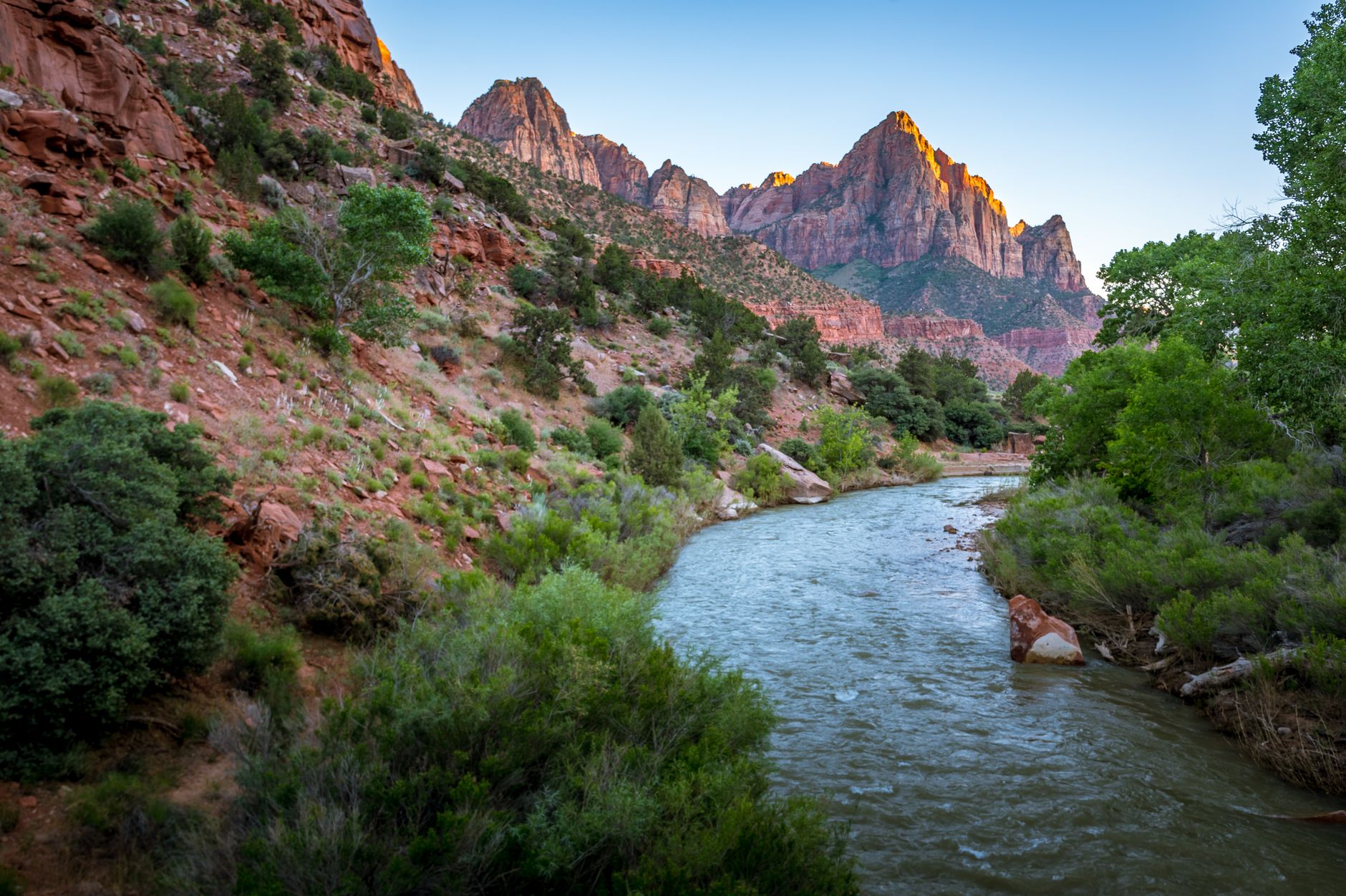
Winter runoff is the engine behind everything good about this season. Snow melting off the high plateaus feeds the springs and seeps in the canyon walls, which means the waterfalls at Emerald Pools genuinely pour instead of dripping, hanging gardens bloom out of bare sandstone, and the Virgin River runs loud and cold through the cottonwoods.
Temperatures are the other draw. Daytime highs climb from comfortable in March to warm by late May, while nights stay cool enough that a morning climb feels good rather than survivable. Compare that to July, when the sensible move is to be off the rock by ten in the morning, and the appeal is obvious.
The flowers are a nice bonus rather than the main event. Depending on the winter, you will see desert paintbrush, claret cup cactus, prickly pear blooms, and sego lilies along the lower trails, with the show moving to higher elevations as the season goes on.
Zion National Park in Spring: Month by Month
March
The quietest of the three and the most variable. Expect cool days, cold nights that can still drop below freezing, and the possibility of snow on the ground at higher elevations or ice lingering on shaded trails. The park shuttle typically resumes operating in early spring, which changes how you access the main canyon, so confirm the current schedule before you arrive. Upper Kolob Terrace Road and Lava Point are normally still closed by snow. On the upside, the canyon is uncrowded and the light is beautiful.
April
The sweet spot for most people, and no secret. Days are reliably warm, the waterfalls are usually at their best, and the cottonwoods leaf out. It is also the busiest stretch of spring, with Easter and overlapping spring break weeks filling Springdale and the shuttle. Weekdays are noticeably calmer than weekends, and an early start is worth more here than any other planning decision.
May
Warm, green, and long on daylight. River flows typically start settling down, which is when The Narrows becomes realistic again. Late May begins to feel like summer in the afternoons, so the early-start habit still matters. Memorial Day weekend is effectively peak season.
The One Big Catch: High Water
This is the detail that derails spring trips. When snowmelt pushes the Virgin River above a certain flow rate, the park closes The Narrows, because wading a river that is moving that hard is genuinely dangerous. In a heavy snow year that closure can persist well into May or beyond.
So if hiking The Narrows is the whole reason for your trip, understand that spring is the least reliable season for it and build a backup plan. Check the park’s current conditions page for the river flow before you count on it, and consider shifting your dates later if it is non-negotiable. Our guide to hiking The Narrows bottom-up covers what the conditions actually need to be.
Two other spring-specific closures to plan around: upper Kolob Terrace Road and the Lava Point area usually stay snowbound into late spring, and some trails hold ice in shaded sections well after the valley has warmed up. Permits are a separate matter entirely. Angels Landing requires a permit through a lottery year-round, and the Left Fork of North Creek does too, so get your applications in early.
Spring Hikes That Make the Most of the Season
- Emerald Pools: The signature spring hike. This is the one window where the falls reliably run, and the lower alcove becomes a curtain of water you can walk behind.
- Watchman Trail: Starts at the visitor center, no shuttle needed, and the evening light on the Towers of the Virgin in April is excellent.
- Canyon Overlook: Short, dramatic, and on the east side, so it works even when the main canyon is packed.
- Pa’rus Trail: Paved, flat, and running right alongside a river that is actually a river this time of year.
- Riverside Walk: Paved and easy, with hanging gardens at their most alive and a close look at high water.
- Observation Point via East Mesa: A back-door route to one of the park’s biggest views, and spring temperatures make the exposed mesa approach pleasant instead of punishing.
One more spring-only tip: the day after a rainstorm is the best hiking day of the season. Waterfalls that were damp streaks the day before turn into real cascades within hours. If weather moves through while you are here, do not write the day off. Go out the next morning.
Where to Stay for a Spring Zion Trip
Spring is exactly when Springdale gets tight and expensive, and when having your own kitchen and outdoor space earns its keep, because the evenings are finally warm enough to sit outside. Our tiny home resort near Zion National Park at Zion’s Tiny Getaway sits in Apple Valley, about 30 minutes from the park entrance via the Smithsonian Butte Scenic Byway, a graded dirt backroad that comes out on Highway 9 in Rockville, four miles west of Springdale. Google will usually route you the long way through Hurricane and La Verkin, which takes closer to 45 or 50 minutes, so the byway is worth knowing about in dry conditions.
Each of the 40 boutique tiny homes at our tiny home resort near Zion National Park at Zion’s Tiny Getaway has a private deck, propane fire pit, BBQ, full kitchen, and private bath. Select homes add a private hot tub, a rooftop deck, or a skylight for stargazing from bed. Spring is also prime season for the mountain biking at Gooseberry Mesa and Wire Mesa minutes away, and for Sand Hollow and Quail Creek state parks, which are warming up but not yet crowded.
Final Thoughts on Visiting Zion National Park in Spring
Zion National Park in spring gives you the park at its most alive: waterfalls running, the river loud, green returning to the canyon floor, and weather that makes a long day on the trail a pleasure. Just plan around the two things spring takes away, which are a dependable Narrows hike and access to the higher country, and get your permit applications in before the lotteries close. Go early, go midweek if you can, and chase the morning after a storm. Check availability at our tiny home resort near Zion National Park at Zion’s Tiny Getaway, about 30 minutes from Zion National Park via the Smithsonian Butte Scenic Byway. Book direct for the best rate, and build your spring trip around the water.
Frequently Asked Questions
Is spring a good time to visit Zion National Park?
It is one of the two best seasons, alongside fall. Spring brings running waterfalls, a full Virgin River, green cottonwoods, wildflowers, and comfortable hiking temperatures. The tradeoffs are that high water often closes The Narrows and that April is one of the park’s busiest months.
Can you hike The Narrows in spring?
Often not. Snowmelt pushes the Virgin River flow high enough that the park closes The Narrows for safety, and in heavy snow years that closure can last into late spring. Check the park’s current river conditions before you count on it, and have a backup hike in mind.
How crowded is Zion in spring?
March is relatively quiet, April is one of the busiest months of the entire year because of spring break and Easter, and May stays busy through Memorial Day weekend. Weekdays are noticeably calmer than weekends in any spring month, and an early start makes the biggest difference.
What is the weather like in Zion in spring?
Daytime highs rise from cool in March to warm by late May, with nights staying chilly throughout and the chance of freezing temperatures early in the season. Afternoon wind is common, higher elevations hold snow into late spring, and shaded trails can stay icy after the valley warms up.
What is the best spring hike in Zion?
Emerald Pools, because spring is the only season when its waterfalls reliably flow. Watchman Trail, Canyon Overlook, Riverside Walk, and the Pa’rus Trail are also at their best, and the morning after a rainstorm is the single best hiking day of the season.
Ready to Book Your Zion Basecamp?
Zion’s Tiny Getaway is 30 minutes from the park via the Smithsonian Butte Byway. Private decks, propane fire pits, full kitchens, and select homes with private hot tubs. Book direct for the best rate.