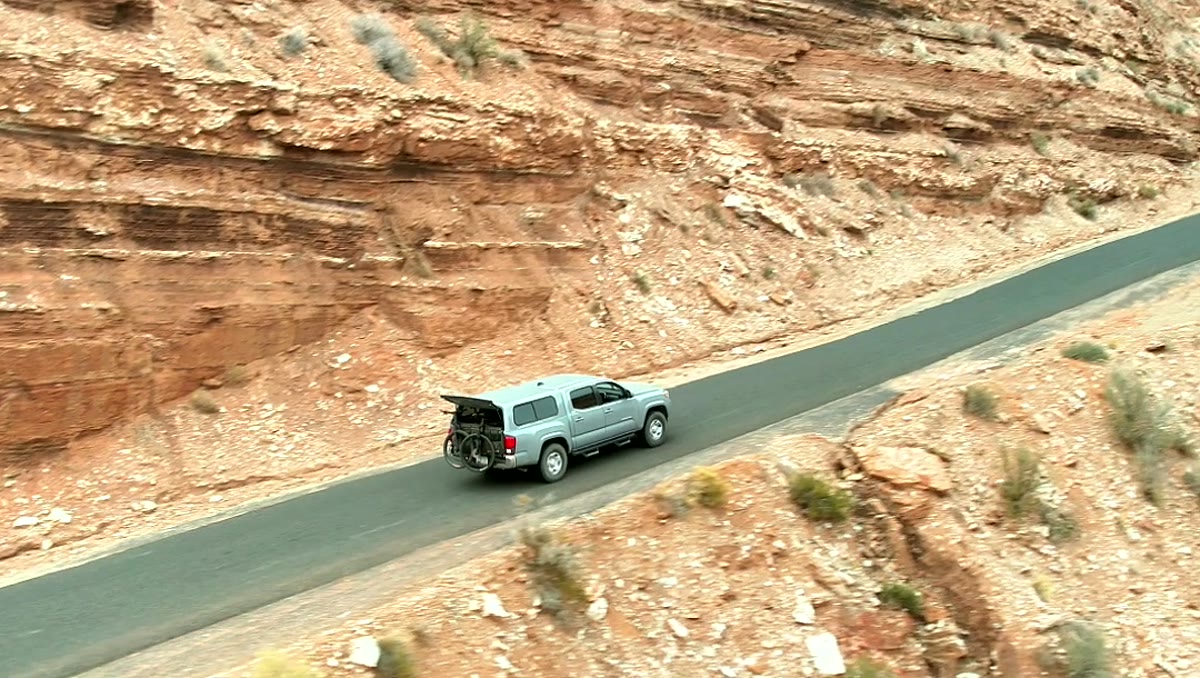
For most of the year the Zion Canyon Scenic Drive belongs to the shuttle. From roughly March through November you park at the visitor center, queue up, and see the canyon through a bus window on somebody else’s schedule. Then for a few months each winter the buses stop, the road opens to private cars, and you can drive all the way up to the Temple of Sinawava yourself. Most visitors have no idea this window exists, which is exactly why it is worth planning around.
Here is how the schedule actually works this winter, what it is genuinely like, and the one catch that trips people up.
When you can drive the Zion Canyon Scenic Drive in 2026 and 2027
There are two separate drive yourself windows this winter, split by a week of holiday shuttle service in the middle. That gap is the part people get wrong.
- November 29 to December 25, 2026. No shuttle service at all. The Scenic Drive is open to private vehicles.
- December 26, 2026 to January 2, 2027. Holiday shuttle service returns, running roughly 8:00 am to 4:30 pm. During this week the road goes back to shuttle only.
- January 3, 2027 until the spring restart. No shuttle again, and the longest of the two windows. The road is open to private vehicles through the rest of winter.
The National Park Service says that during most years shuttles run daily from March through November, so the second window typically runs until sometime in early spring. The exact 2027 restart date has not been announced yet. For reference, service resumed on March 7 in 2026. Check the park’s shuttle page before you lock in dates, because these schedules are set each year and the park adjusts them.
The short version: if you want to drive the canyon, aim for the first three weeks of December, or anytime from the first week of January onward. Avoid the week between Christmas and New Year, which is both the busiest stretch of winter and the one week the buses come back.
What driving the Zion Canyon Scenic Drive is actually like
The difference is not really about convenience. It is about control.
On a shuttle day you get off where the bus stops and you leave when the next one comes. Driving, you pull over at the Court of the Patriarchs because the light is good, not because a bus door opened. You can sit at Big Bend for forty minutes watching the light climb the Great White Throne. You can be at the Riverside Walk trailhead at sunrise without first standing in a shuttle line in the dark, which in peak season can eat the best light of the day before you have taken a single step.
Winter in the canyon also looks different from the photographs most people have seen. The cottonwoods along the Virgin River are bare, which opens up sightlines to the walls that summer foliage hides. Snow sits on the high rock while the canyon floor stays mild. Plenty of December and January afternoons are warm enough to hike in a t shirt, and then the temperature drops hard once the sun leaves the canyon, usually by mid afternoon in there.
And it is quiet. Zion took nearly five million visitors in 2025, which made it the second most visited national park in the country, and almost none of them came in January.
The catch: the road closes when parking fills
This is the part the other guides skip, and it is the single thing most likely to derail your day.
When the shuttle is not running, there is no overflow system. The Park Service is explicit that the Scenic Drive will close for the day once there are no more legal parking spaces, and that this happens often in December, January, and February. There are only a few dozen spaces at the popular trailheads. Once they are gone, a ranger closes the road and that is the end of it until the next morning.
How to not get caught by it:
- Be at the park entrance early. In winter that means before 9:00 am on a weekend, and the earlier the better around the holidays and on three day weekends.
- Weekdays are dramatically easier than weekends. A Tuesday in January is a different park from a Saturday in January.
- Check the park’s current conditions page the morning of. Parking closures get posted there.
- Have a backup. The east side of the park along Highway 9 never requires a shuttle and never closes for parking in the same way.
- Do not park illegally on the shoulder. It is ticketed, and it is the reason the closures exist.
One piece of good news on access: the escorted permit that used to be required for oversized vehicles through the Zion to Mount Carmel Tunnel was eliminated in June 2026. Most guides still have the old information.
Where to stop along the Zion Canyon Scenic Drive
The Scenic Drive runs up the canyon from Canyon Junction to the Temple of Sinawava. Working your way up:
Court of the Patriarchs
A two minute walk from the pullout to a viewpoint of three sandstone peaks. Best in the morning when the light is on their faces. In winter you will often have it to yourself.
Zion Lodge and the Emerald Pools
The Lower Emerald Pool trail is short, paved for much of its length, and genuinely better in cold weather because the seeps freeze into ice columns on the overhang. The upper trails get icy and are worth traction devices. Our guide to the Emerald Pools Trail covers the three tiers.
The Grotto
The jumping off point for Angels Landing. The permit requirement applies year round, and winter conditions make the chain section genuinely dangerous when there is ice on the sandstone. Read our Angels Landing permit guide before you plan on it.
Big Bend
No trail, just the best pullout in the canyon. The Great White Throne and Angels Landing are both above you. This is the stop that justifies having your own car, because you can stay as long as the light is doing something.
Temple of Sinawava and the Riverside Walk
The end of the road. The Riverside Walk is a flat, paved mile along the Virgin River to where The Narrows begins, and it is the single best winter walk in the canyon. Hiking into The Narrows itself in winter means a drysuit and close attention to water flow and temperature. The walk to the gate needs neither.
Worth knowing while you plan: the East Rim rockfall near Weeping Rock closed Hidden Canyon, and Observation Point can no longer be reached from inside Zion Canyon at all. It is still very much reachable from the east side, and the East Mesa Trail route is an easier hike than the old canyon approach and needs no shuttle at any time of year.
Build in the east side and the canyon overlook
The drive yourself window is a good excuse to treat the park as two halves. While the Scenic Drive handles your mornings, the east side along Highway 9 is drivable any day of the year, shuttle season or not, and the slickrock up there takes winter light beautifully.
The Canyon Overlook Trail sits just east of the tunnel and delivers one of the best views in the park for a one mile round trip. The Park Service rates it moderate rather than easy, and the exposed sections hold ice in winter, so take it seriously even though it is short.
Winter nights are the other half of the argument. Zion sits under some of the darkest skies in the lower 48, and the long December nights mean you do not have to stay up until eleven to see them. Our stargazing guide covers where to look.
Where to stay for a winter Zion trip
Springdale sits at the park gate and is the obvious choice, though a number of its restaurants and shops cut back hours or close outright in January and February. Apple Valley, on the other side of the Smithsonian Butte Scenic Byway, stays open year round and is quieter.
Our tiny home resort near Zion National Park is 30 minutes from the park via the Smithsonian Butte Scenic Byway. That matters more in winter than people expect, because an early start is the whole game when the road can close on you by mid morning, and 30 minutes of empty highway beats sitting in the Springdale queue.
Every home has a full kitchen, which is worth real money in a season when the gateway town restaurants keep short hours. Most have private hot tubs and fire pits, which stop being amenities and start being the point once the sun drops behind the cliffs at three in the afternoon. If you want the full picture of the area, our guide to Springdale, Hurricane, and Apple Valley compares all three, and you can see the homes at our tiny home resort near Zion National Park.
Plan it around the window
The handful of winter weeks when you can drive the Zion Canyon Scenic Drive yourself are the closest thing to having the canyon on your own terms. Go on a weekday, get there early, keep a backup plan for the morning the road closes, and you will see a version of Zion that the crowds who come in summer never do. When you are ready to pick dates, our tiny home resort near Zion National Park is 30 minutes out via the Smithsonian Butte Scenic Byway, and booking direct always gets you the best rate.
Frequently Asked Questions
Can you drive your own car on the Zion Canyon Scenic Drive?
Yes, but only when the shuttle is not running. This winter that means November 29 to December 25, 2026, and again from January 3, 2027 until the shuttle restarts in spring. Holiday shuttle service runs December 26 to January 2, and during that week the road is shuttle only.
When does the Zion shuttle start running again in 2027?
The exact 2027 date has not been announced. The Park Service says that during most years shuttles run daily from March through November, and service resumed on March 7 in 2026. Check the park’s shuttle page before booking, since dates are set each year.
Does the Zion Canyon Scenic Drive ever close in winter?
Yes. When shuttles are not running there is no overflow system, and the Park Service closes the road for the day once the legal parking spaces are gone. They note this happens often in December, January, and February. Arrive early, go midweek if you can, and check the park’s current conditions page that morning.
Is Zion worth visiting in December and January?
If you want the canyon quiet, yes. The crowds are gone, the bare cottonwoods open up views of the walls, and many afternoons are mild enough to hike comfortably. Daylight is short and shaded trails hold ice, so plan shorter days and bring traction devices.
What is closed in Zion Canyon in winter?
Shaded trails can be icy, and the chain section on Angels Landing is dangerous with ice. Separately, and not a seasonal issue, the East Rim rockfall near Weeping Rock closed Hidden Canyon and cut off access to Observation Point from inside Zion Canyon. Observation Point is still reachable from the east side via the East Mesa Trail.
Ready to Book Your Zion Basecamp?
Zion’s Tiny Getaway is 30 minutes from the park via the Smithsonian Butte Byway. Private decks, propane fire pits, full kitchens, and select homes with private hot tubs. Book direct for the best rate.