Summer is Zion’s busiest season and its most physically demanding one, which is a combination that catches a lot of first-time visitors off guard. Visiting Zion National Park in summer means long daylight, every road and trail open, the Narrows at its most inviting, and a canyon that can sit above 100 degrees by mid-afternoon with the sandstone radiating heat back at you. None of that makes it a bad time to come. It just means the trip runs on a different schedule than a spring or fall trip would. Beat the heat and the crowds with the same move, which is being out early, and summer turns into one of the best weeks you will have in southern Utah.
What Zion National Park in Summer Is Really Like
June through August brings daytime highs that routinely sit in the upper 90s and cross 100, with July typically the hottest stretch. Zion Canyon is a slot of rock that absorbs sun all day and releases it all evening, so the cliffs stay warm long after the sun is off them. Exposed hikes like Angels Landing become genuinely risky in the afternoon, and rangers are not exaggerating when they tell you to turn around.
Then there is the monsoon. From roughly mid-July into September, afternoon thunderstorms build over the plateaus and dump rain miles from where you are standing. That is the mechanism behind flash flooding in the park’s narrow canyons, and it is why the park publishes a daily flash flood potential rating. On the upside, those storms produce dramatic skies, temporary waterfalls pouring off the canyon walls, and the best hiking morning of your trip the next day.
Crowds peak alongside the heat. Shuttle lines at the visitor center can be long by mid-morning, Springdale parking fills, and the popular trailheads feel like a line rather than a wilderness.
Zion National Park in Summer: Build the Day Around the Heat
Every successful summer day in Zion follows the same shape.
Dawn to mid-morning: the real hiking window. Be at the park for the first shuttles. The canyon is shaded, the temperature is twenty degrees cooler than it will be at two in the afternoon, and the trails are quiet. This is when you do anything strenuous or exposed.
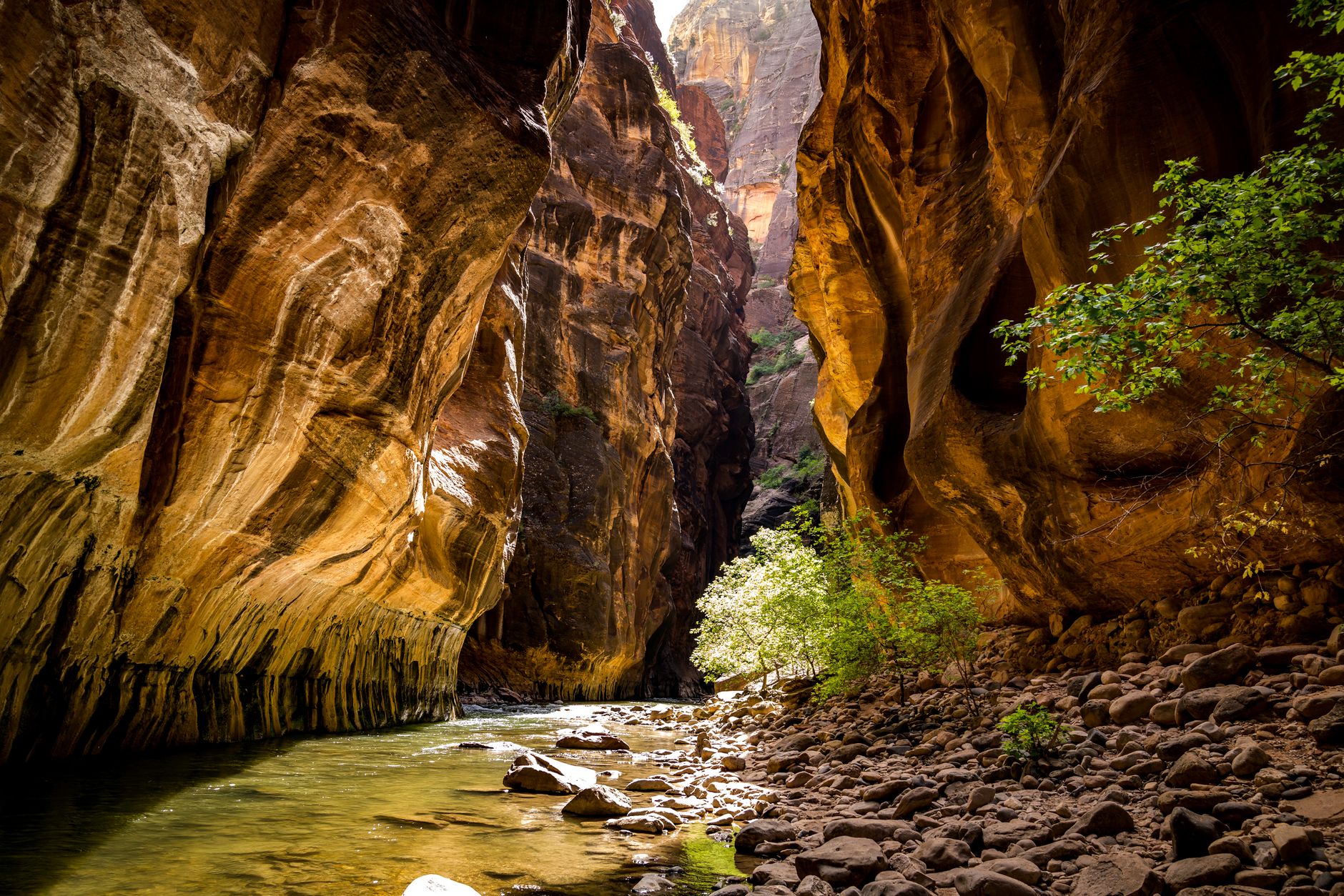
Midday: get in the water or get in the shade. This is the time for the Narrows, where you are walking in the river between walls that block most of the sun, or for a swim away from the park. It is also a fine time to be at the Zion Human History Museum, on the Lodge lawn, or honestly back at your place with the fan on.
Late afternoon and evening: watch the sky. During monsoon season, this is when storms arrive. If the forecast is clear, the long summer evenings are a gift, with light on the walls until well past eight and the Watchman Trail right at the visitor center for an easy sunset without the shuttle.
Our guide to avoiding crowds at Zion goes deeper on the timing, and the shuttle system explained post covers how the first-shuttle strategy actually works.
Heat Safety, Without the Lecture
Heat is the thing most likely to ruin a summer Zion trip, and it is also the most preventable.
- Water, more than you think. A gallon per person per day is the standard guidance for a hiking day in this climate, and it is not padded. Carry it, do not plan to find it.
- Electrolytes, not just water. Sweating that hard and drinking only plain water can leave you worse off. Bring salty snacks or a mix.
- Know the warning signs. Headache, nausea, dizziness, and stopping sweating are reasons to get into shade immediately, not to push to the viewpoint.
- Sun cover beats sunscreen alone. A wide brim, long sleeves, and sunglasses do more for you at 2 p.m. than another coat of SPF.
- Skip the exposed climbs after mid-morning. Angels Landing, the West Rim, and Observation Point in afternoon August heat are not worth it.
- Check the flash flood rating daily. Then stay out of narrow canyons when it is elevated, no matter how blue the sky looks overhead.
The Summer-Specific Wins
Some things are genuinely better this time of year. The Narrows is the headline: river flows have usually settled by early summer, the water is a relief rather than a hazard, and walking upstream between thousand-foot walls on a 100 degree day is one of the great experiences in the national park system. Rent neoprene socks and canyoneering shoes in Springdale and do it properly.
Beyond the park, this is swim season. Sand Hollow and Quail Creek state parks are a short drive and offer actual open water, and there is a string of local swimming holes worth knowing about, which we cover in our swimming holes guide. Higher elevations are also an option most visitors never consider: the Kolob Terrace area sits thousands of feet above the canyon floor and runs meaningfully cooler, with Lava Point among the coolest spots in the park.
Finally, the long days mean you can do a full early hike, take a genuine midday break, and still get a second outing in before dark. Few other seasons give you that.
Where to Stay for a Summer Trip
In summer, where you sleep matters more than it does in April, because you need a real break in the middle of the day and air conditioning you can count on. Our tiny home resort near Zion National Park at Zion’s Tiny Getaway sits out in Apple Valley, about 30 minutes from the park entrance via the Smithsonian Butte Scenic Byway, a graded dirt backroad that comes out on Highway 9 in Rockville, four miles west of Springdale. Being outside the Springdale crush means an easier early exit in the morning, which is the whole ballgame in July.
Each of the 40 boutique tiny homes at our tiny home resort near Zion National Park at Zion’s Tiny Getaway has a private deck, propane fire pit, BBQ, full kitchen, and private bath, so dinner happens on your deck once the sun is off the rock instead of in a restaurant queue. Select homes add a private hot tub, a rooftop deck, or a skylight for stargazing from bed, and summer nights out here are warm enough to make real use of all three. Sand Hollow and Quail Creek are close by for a swim day, and the mountain biking at Gooseberry Mesa and Wire Mesa is best ridden at dawn this time of year.
Final Thoughts on Zion National Park in Summer
Zion National Park in summer rewards people who respect the clock. Hike at dawn, get in the river at midday, watch the monsoon sky in the afternoon, and come back out for the long evening light. Carry more water than feels reasonable, check the flash flood rating every morning, and leave the exposed ridgelines for an earlier hour. Do that and you get the Narrows at its best, open roads to every corner of the park, and nights warm enough to sit outside under a sky full of stars. Check availability at our tiny home resort near Zion National Park at Zion’s Tiny Getaway, about 30 minutes from Zion National Park via the Smithsonian Butte Scenic Byway. Book direct for the best rate, and set your alarm early.
Frequently Asked Questions
How hot does Zion get in summer?
Daytime highs routinely sit in the upper 90s and cross 100 degrees from June through August, with July typically the hottest stretch. The canyon walls absorb heat all day and radiate it into the evening, so it stays warm long after the sun is off the rock.
Is it worth visiting Zion in July?
Yes, if you plan around the heat. July gives you long daylight, every road and trail open, and the Narrows at its best. The cost is high temperatures, peak crowds, and monsoon thunderstorms, so the trip has to run on a dawn-start schedule rather than a leisurely one.
What is the best hike in Zion in summer?
The Narrows, because you are walking in the river between walls that block most of the sun. River flows have usually settled by early summer, which makes it both safer and more comfortable than in spring. Rent proper canyoneering shoes and neoprene socks in Springdale.
What is monsoon season in Zion?
Roughly mid-July into September, when afternoon thunderstorms build over the plateaus. The main hazard is flash flooding in narrow canyons from rain falling miles away, so check the park’s daily flash flood potential rating and stay out of slots when it is elevated.
How much water should I carry hiking in Zion in summer?
Plan on about a gallon per person per day for a hiking day, and carry it rather than expecting to refill on the trail. Add salty snacks or an electrolyte mix, because heavy sweating while drinking only plain water can leave you feeling worse.
Ready to Book Your Zion Basecamp?
Zion’s Tiny Getaway is 30 minutes from the park via the Smithsonian Butte Byway. Private decks, propane fire pits, full kitchens, and select homes with private hot tubs. Book direct for the best rate.