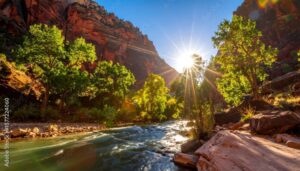
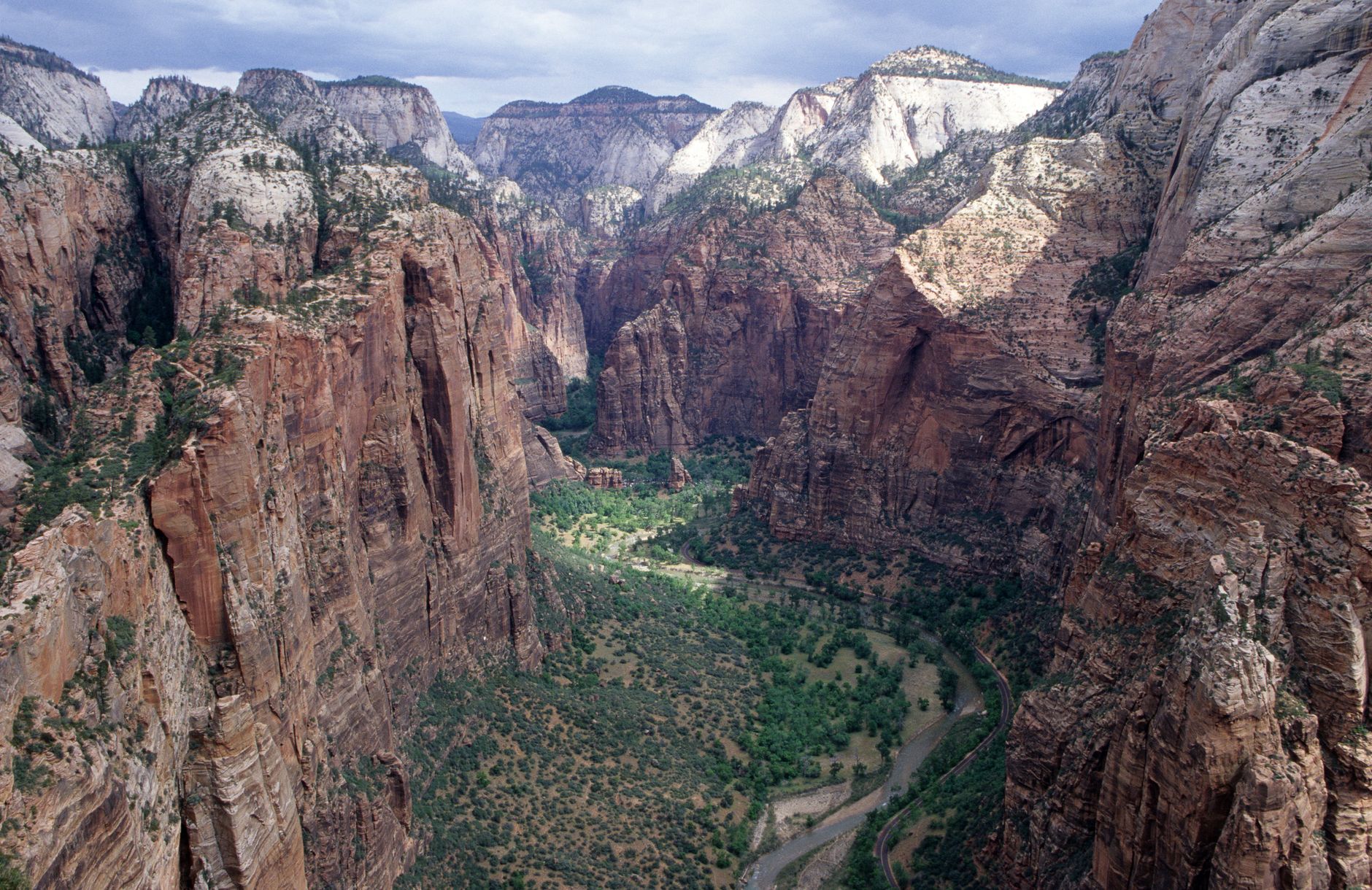
There is a reason photographers set alarms for the dark hours here. Zion National Park photography is at its absolute best at sunrise, when the first light sets the sandstone glowing orange and red while the canyon floor still sits in cool shadow. Crowds are thin, the light is soft, and the park feels like it belongs to you. This guide covers where to point your camera, when to be there, and how to make the early start painless.
Why Sunrise Wins in Zion
Zion is a deep canyon, so the sun does not clear the rim for a while after the official sunrise time. That delay is a gift. For 30 to 45 minutes you get alpenglow, a warm pink-orange wash on the highest peaks, before direct light floods in. Midday sun goes flat and harsh against these walls, so first light is where the drama lives.
Best Sunrise Photography Spots in Zion
The Towers of the Virgin
Walk out to the lawn behind the Zion Human History Museum. The Towers of the Virgin line up in front of you and catch alpenglow before almost anything else in the park. This is the signature first-light frame, and it is an easy, flat approach in the dark.
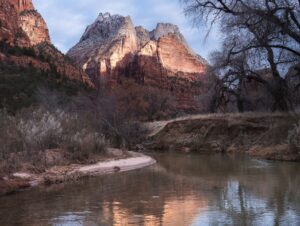
The Watchman from Canyon Junction Bridge
The Watchman peak reflected in the Virgin River is one of the most recognizable views in the Southwest, and it works at both sunrise and sunset. Set your tripod on the pedestrian side of Canyon Junction Bridge and use the river as a leading line.
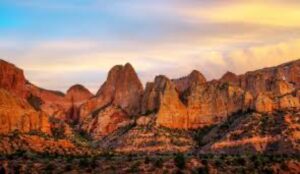
Kolob Canyons
In the park’s northwest section off I-15 Exit 40, the Kolob Canyons finger ridges glow spectacularly at first light and see a fraction of the traffic. It is a longer drive but a reliable way to shoot without company, and it is an easy run from our tiny home resort near Zion National Park in Apple Valley.
Pa’rus Trail and the Virgin River
The paved Pa’rus Trail gives you open sky and river access for reflections and foreground interest. It is flexible, easy to walk in low light, and a good fallback when the main viewpoints are busy.
Timing and Light
Sunrise in Zion ranges from roughly 5:15 am in mid-summer to about 7:40 am in mid-winter. The key habit for strong Zion National Park photography is arriving 30 to 45 minutes early so you are set up when the peaks light up, not scrambling. Check the forecast too, a few high clouds can turn a good sunrise into a great one, while a dead-clear sky can be flat.
Gear and Technique
- Tripod: non-negotiable for sharp low-light frames and long exposures on the river.
- Lenses: a wide-angle for canyon scale, a mid-telephoto to isolate glowing peaks.
- Filters: a polarizer to cut glare on water, a graduated ND to hold the bright sky.
- Headlamp: you will be walking and composing before dawn.
- Settings: shoot RAW, bracket exposures, and use a low ISO with your tripod for clean shadows.
Stay Close, Shoot More
The hardest part of sunrise photography is the pre-dawn drive. Base yourself nearby and the whole thing gets easier. Our tiny home resort near Zion National Park sits 30 minutes from Zion’s south entrance via the Smithsonian Butte Byway, so a 5 am start is genuinely doable. Come back to a private deck and full kitchen to review your shots over locally roasted Utah coffee, and if you booked a home with a rooftop deck, the desert night sky delivers a bonus round of astrophotography.
Serious about your images? Plan two or three mornings so weather cannot ruin your one shot at it. With a comfortable tiny home resort near Zion National Park minutes from the gate, you can chase the light as many days as it takes. Great Zion National Park photography rewards the people who simply keep showing up before dawn, and staying close is how you make that happen. Book direct for the best rate.
Frequently Asked Questions
What is the best spot for sunrise photography in Zion?
The Towers of the Virgin from the Human History Museum lawn is the classic first-light shot, as the peaks catch alpenglow before the canyon floor. The Watchman from Canyon Junction Bridge and Kolob Canyons are also outstanding at sunrise.
What time is sunrise at Zion National Park?
Sunrise ranges from about 5:15 am in mid-summer to around 7:40 am in mid-winter. Because canyon walls delay direct light, arrive 30 to 45 minutes before the listed sunrise to catch alpenglow on the high peaks.
Do I need a permit to photograph in Zion National Park?
No permit is required for personal or hobby photography. Only commercial shoots with models, sets, or crews may need a permit. Standard park entry is 35 dollars per vehicle for a 7-day pass.
Where should I stay for early Zion photography?
Staying close cuts the pre-dawn drive. Zion’s Tiny Getaway is a tiny home resort near Zion National Park, 30 minutes from the south entrance via the Smithsonian Butte Byway, so you can reach first-light spots without a long start.
What gear do I need for Zion sunrise photos?
A tripod is essential in low light, plus a wide-angle lens for canyon scale and a mid-telephoto for isolating peaks. Bring a headlamp for the dark approach and a polarizer or graduated filter to manage the bright sky.
Ready to Book Your Zion Basecamp?
Zion’s Tiny Getaway is 30 minutes from the park via the Smithsonian Butte Byway. Private decks, propane fire pits, full kitchens, and select homes with private hot tubs. Book direct for the best rate.