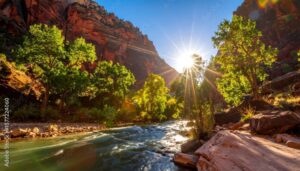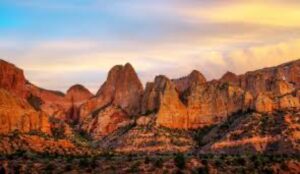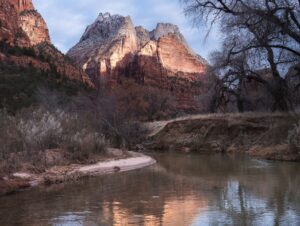
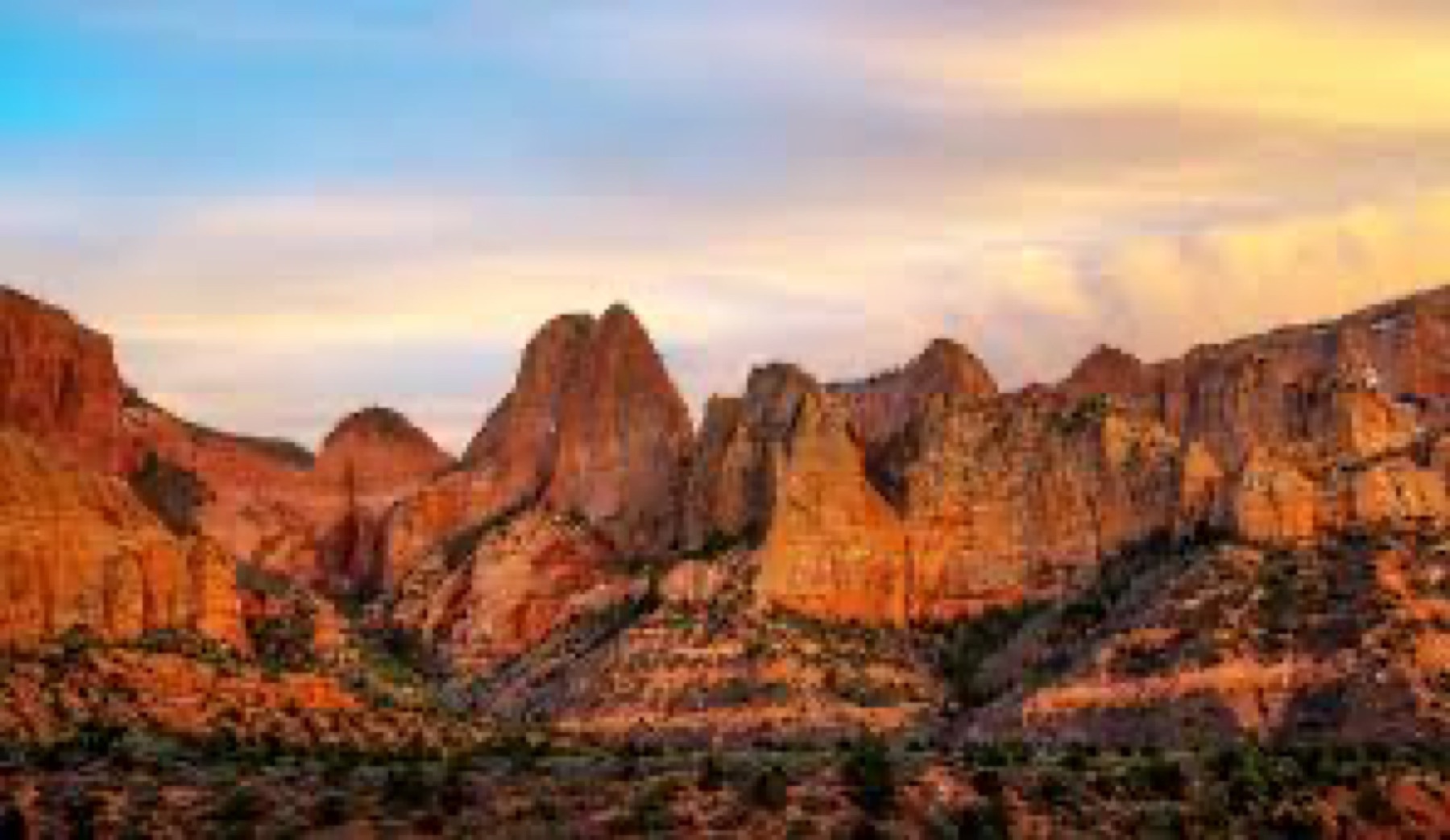
Ask most travelers about Zion National Park and they’ll describe the same scene: shuttle buses rolling through the main canyon, a line of hikers snaking up Angels Landing, crowds gathering at the Riverside Walk. What almost nobody mentions is Kolob Canyons, Zion’s quiet northwest corner, a section of the very same national park where you can stand beneath 2,000-foot crimson walls and hear nothing but wind and canyon wrens. If you’re planning a Zion trip and want at least one day that feels like the park did decades ago, Kolob Canyons deserves a spot on your itinerary. Here’s everything you need to know to explore it well, and how to base your whole trip from a comfortable spot in Apple Valley.
Why Visit Kolob Canyons, Zion’s Quieter Northwest Corner
Kolob Canyons is part of Zion National Park, but it operates almost like a separate park. It has its own entrance off Interstate 15 at Exit 40, its own small visitor center, and its own scenic drive. Your Zion entrance pass covers it, so if you’ve already paid the $35 vehicle fee for a 7-day pass, Kolob costs you nothing extra.
The landscape here is different from the main canyon in a way that photographs barely capture. Instead of one deep gorge, Kolob is a series of parallel “finger canyons” carved into the Kolob Terrace, with sheer Navajo sandstone walls glowing deep red against juniper and pinyon green. The elevation is higher than Zion Canyon, which means cooler temperatures in summer and a real chance of snow dusting the cliffs in winter.
And the crowds? They simply never arrive in force. While the main canyon fills shuttle after shuttle, Kolob’s parking lots often have open spaces even on weekends. It’s the same park, the same geology, the same pass, with a fraction of the people.
The Kolob Canyons Scenic Drive
The heart of a Kolob visit is the scenic drive, a five-mile paved road that climbs from the visitor center into the finger canyons. Unlike Zion Canyon Scenic Drive, which restricts private vehicles in season and requires the free shuttle spring through fall, the Kolob Canyons road is open to your own car year-round, conditions permitting. You drive at your own pace, stop at pullouts whenever a view grabs you, and never wait in a shuttle line.
A few tips for the drive:
- Stop at the visitor center first. Rangers there can tell you about current trail conditions, and it’s your last restroom before the road.
- Go late in the day if you can. The canyon walls face west and southwest, so afternoon and evening light sets the sandstone on fire. Sunset here is one of the most underrated shows in the entire park.
- Budget more time than you think. The drive itself takes only about 20 minutes without stops, but you will stop. Every pullout earns it.
The road ends at the Kolob Canyons Viewpoint, where a short walk leads to one of the best panoramas in southern Utah.
Timber Creek Overlook: Big Views for Little Effort
From the parking area at the end of the scenic drive, the Timber Creek Overlook Trail delivers a huge payoff for minimal work. It’s roughly a mile round trip along a ridgeline, with modest elevation gain, ending at an overlook that takes in the finger canyons, the Pine Valley Mountains, and on clear days, terrain stretching far to the south.
This is the trail for the first evening of your trip, for travelers with kids, or for anyone who wants Zion scenery without a Zion workout. Bring a jacket even in summer. The ridgeline sits at high elevation and catches the wind, and once the sun drops behind the cliffs the temperature follows fast.
Taylor Creek Trail and the Double Arch Alcove
If you have half a day, the Taylor Creek Trail is the signature hike of Kolob Canyons. The trail follows the Middle Fork of Taylor Creek about five miles round trip, crisscrossing the shallow stream dozens of times as the canyon walls narrow and rise around you. You’ll pass two historic homestead cabins from the 1930s before the canyon delivers its finale: the Double Arch Alcove, a massive, layered amphitheater of streaked sandstone that looks painted rather than eroded.
A few things worth knowing before you go:
- The creek crossings are usually easy rock-hops, but water levels change with snowmelt and storms. Check conditions at the visitor center.
- The alcove stays shaded and cool, a genuine relief in warmer months.
- No permit is required. Unlike Angels Landing, The Subway, or a top-down Narrows trip, you just show up and hike.
Morning light in the canyon is beautiful, and starting early means you may have the Double Arch Alcove entirely to yourself, an experience that’s nearly impossible to replicate anywhere in the main canyon.
La Verkin Creek Trail: The Long Walk to Kolob Arch
For strong hikers and backpackers, the La Verkin Creek Trail is Kolob’s big adventure. The trail descends from Lee Pass and follows Timber Creek and then La Verkin Creek deep into the backcountry, with a spur leading to Kolob Arch, one of the largest freestanding natural arches in the world.
As a day hike, the round trip to the arch runs roughly 14 miles, which makes it a full, committed day. Many hikers prefer it as an overnight backpacking trip, and backcountry campsites along La Verkin Creek require a wilderness permit through the park. Either way, carry more water than feels necessary, especially outside the cool months, and get an early start.
The reward is a stretch of Zion that most park visitors never see: quiet creekside walking, towering red walls, and an arch of staggering scale hidden in a side canyon. If you finish this one, you’ve earned the fire pit and hot tub waiting back at your tiny home resort near Zion National Park.
Why Does Kolob Canyons Stay So Quiet?
It comes down to geography and habit. Kolob Canyons sits about 40 miles by road from the main south entrance in Springdale, accessed from I-15 rather than the highway through town. There’s no road connecting Kolob directly to Zion Canyon inside the park, so visitors can’t simply drift over. You have to choose to go.
Most visitors never do. They book a Springdale itinerary, ride the shuttle, hike the famous names, and head home. That habit is exactly what keeps Kolob feeling wild. The trails are quieter, the viewpoints are uncrowded, and rangers actually have time to talk. For travelers who value solitude, that “inconvenience” is the entire appeal.
Planning Your Kolob Canyons Zion Itinerary from Apple Valley
Here’s where basing yourself matters. Zion’s Tiny Getaway sits in Apple Valley, Utah, 30 minutes from Zion National Park via the Smithsonian Butte Byway, and roughly an hour from the Kolob Canyons entrance at I-15 Exit 40. That position lets you build a trip that covers both sides of the park without repacking or fighting for parking in Springdale.
A sample three-day rhythm that works well:
- Day one, main canyon. Drive the Smithsonian Butte Byway to the south entrance, ride the shuttle, and hike Riverside Walk, the Pa’rus Trail, or the bottom-up Narrows. If you scored an Angels Landing permit through the recreation.gov lottery, this is your day.
- Day two, Kolob Canyons. Sleep in a little, drive up to Exit 40, hike Taylor Creek to the Double Arch Alcove, then finish with the scenic drive and sunset at Timber Creek Overlook. Same park pass, completely different park.
- Day three, close to home. Ride world-class singletrack at Gooseberry Mesa or Wire Mesa, paddle at Sand Hollow or Quail Creek State Park, or soak at Zion Canyon Hot Springs in LaVerkin before an easy evening at the resort.
Every home at the resort comes with a full kitchen, so you can pack a real lunch for the long Kolob trails, and a private deck with a propane fire pit for the debrief afterward. Select homes add a private hot tub or a rooftop deck, and Apple Valley’s dark skies make the stargazing from a skylight-equipped home genuinely special. It’s the kind of setup that turns a tiny home resort near Zion National Park into a true basecamp rather than just a bed.
When to Visit Kolob Canyons
The best windows mirror the rest of Zion: March through May and September through November bring mild temperatures and glowing light. Summer works better at Kolob than in the main canyon thanks to the higher elevation, though afternoon monsoon storms in late summer can bring flash flood risk in the drainages, so check the forecast before hiking Taylor Creek or La Verkin Creek.
Winter is Kolob’s secret season. Snow on red sandstone is unforgettable, and you may share the entire scenic drive with a handful of cars. The road can close temporarily after storms, so call ahead or check the park’s current conditions page before making the drive.
The Quiet Side Is Worth the Detour
Kolob Canyons is proof that Zion still holds places where the crowds thin out and the canyon country feels enormous and personal at the same time. Same park, same pass, entirely different experience. Build it into your trip, pair it with a main canyon day, and give yourself a comfortable basecamp to come home to each night. Zion’s Tiny Getaway puts 40 boutique tiny homes 30 minutes from Zion National Park via the Smithsonian Butte Byway, with full kitchens, fire pits, and Utah-roasted coffee waiting after every trail day. When you’re ready to explore Kolob Canyons, Zion’s quiet side, book direct at our tiny home resort near Zion National Park for the best rate, and start planning the version of Zion most visitors never see.
Frequently Asked Questions
Is Kolob Canyons part of Zion National Park?
Yes. Kolob Canyons is the northwest section of Zion National Park, accessed from I-15 at Exit 40 rather than through Springdale. Your regular Zion entrance pass covers admission, and staying at a basecamp like Zion’s Tiny Getaway makes it easy to visit both sections on one trip.
How far is Kolob Canyons from the main entrance of Zion?
Kolob Canyons is about 40 miles by road from the south entrance in Springdale, roughly a 45-minute drive. There is no connecting road between the two sections inside the park, so you drive around via the highway and I-15.
Do I need a permit to hike in Kolob Canyons?
Day hikes like Timber Creek Overlook, Taylor Creek to the Double Arch Alcove, and the La Verkin Creek Trail require no permit. You only need a wilderness permit if you plan to camp overnight in the backcountry, such as on a La Verkin Creek backpacking trip toward Kolob Arch.
Where should I stay to visit both Kolob Canyons and the main Zion canyon?
Zion’s Tiny Getaway in Apple Valley, Utah works as a basecamp for both. The resort’s 40 boutique tiny homes sit 30 minutes from Zion National Park via the Smithsonian Butte Byway and about an hour from the Kolob Canyons entrance, with full kitchens, private fire pits, and select homes offering hot tubs and stargazing skylights.
What is the best time of day to visit Kolob Canyons?
Late afternoon and evening are ideal because the canyon walls face west and light up dramatically before sunset. For hiking Taylor Creek, start in the morning to enjoy cool temperatures and have the Double Arch Alcove nearly to yourself.
Ready to Book Your Zion Basecamp?
Zion’s Tiny Getaway is 30 minutes from the park via the Smithsonian Butte Byway. Private decks, propane fire pits, full kitchens, and select homes with private hot tubs. Book direct for the best rate.