Most people assume Zion National Park is a summer destination. But spend one morning watching snow dust the red canyon walls while the crowds stay home, and you will understand why experienced park visitors keep coming back in the off-season. Zion National Park in winter is one of the American Southwest’s best-kept secrets – a quieter, more dramatic, and surprisingly accessible version of a park that draws five million visitors a year. If you have been wondering whether a winter trip is worth it, the short answer is yes. The longer answer is below.
A note from our own winter visit: This past winter we started with a chilly early morning at Zion and found ample parking waiting for us. We hiked up to Scout Lookout, and within just a few minutes on the trail we had shed our layers down to t-shirts. The temps were mild, the crowds were minimal, and the scenery was stunning.
What Zion National Park in Winter Actually Looks Like
Zion sits at a lower elevation than many Utah parks, with the canyon floor around 3,900 feet. That means winter temperatures are mild compared to Bryce Canyon or the high plateaus, but you will still find genuinely cold mornings, occasional snowfall, and ice on shadier trails. Daytime highs typically land between 45 and 55 degrees Fahrenheit from December through February, with overnight lows dropping into the 20s. March starts to warm up, and by late March the park feels like spring.
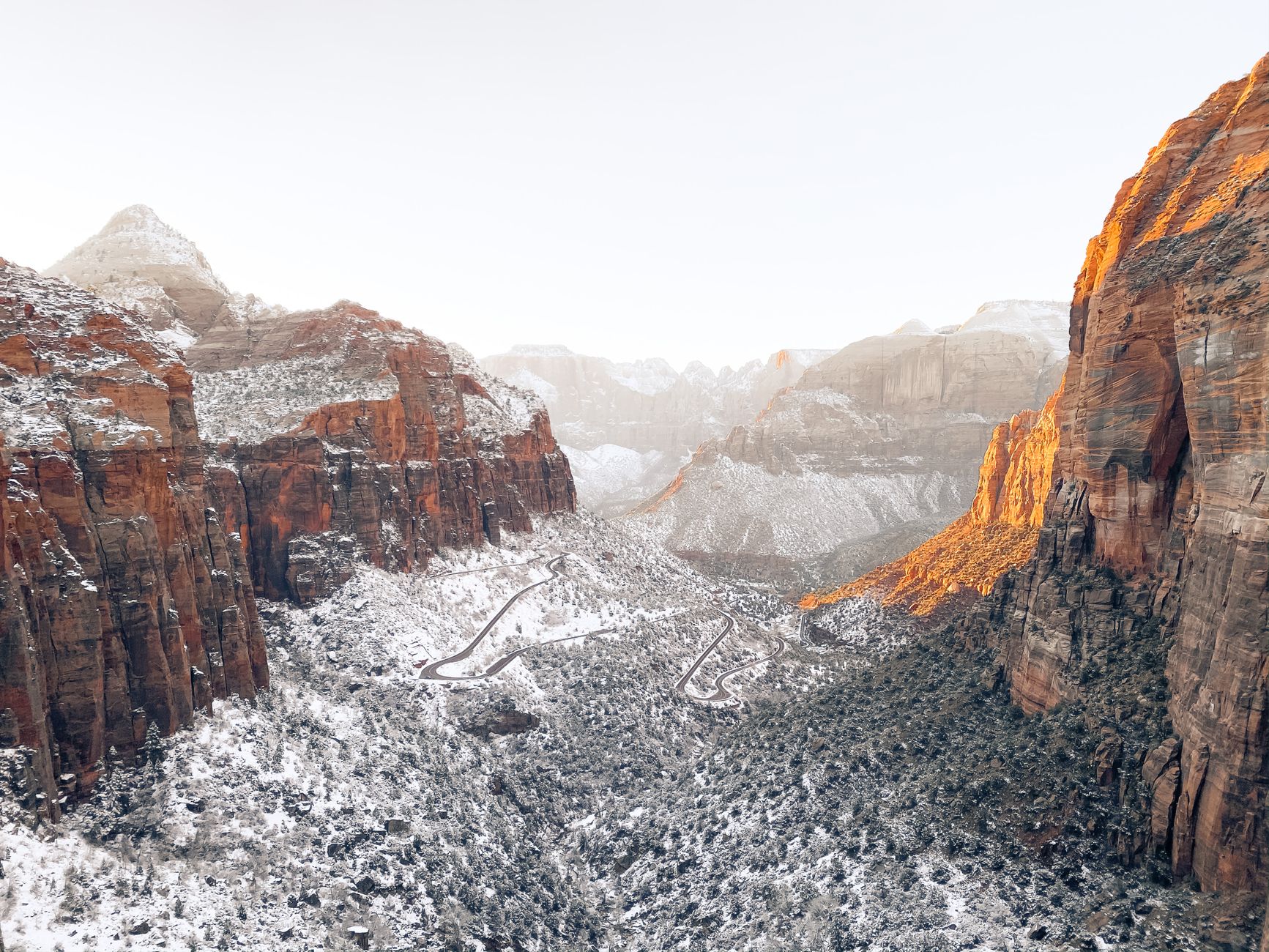
The visual payoff is significant. Snow on the Navajo Sandstone turns the canyon into something close to a painting. The famous red and orange walls look even more vivid against a white sky or gray storm clouds. And because the free shuttle does not run in winter, you can drive the Zion Canyon Scenic Drive in your own vehicle – a rare experience that summer visitors never get. Stop wherever you want, stay as long as you like, and move at your own pace through one of the most striking canyon landscapes on earth.
Best Trails for Zion National Park in Winter
Not every trail is equally safe when temperatures drop, but winter opens up some genuinely excellent options. Check current conditions at the park visitor center or the National Park Service website before heading out – conditions can change quickly after a storm.
Pa’rus Trail
This paved, flat 3.5-mile trail runs alongside the Virgin River and is one of the few trails in the park that allows dogs and bikes. It stays accessible in most winter conditions and offers sweeping views of the canyon walls without any technical scrambling. A natural choice for families, dog owners, or anyone who wants a relaxed, beautiful morning in the park.
Riverside Walk
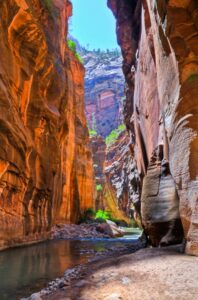
The 2.2-mile paved trail at the end of Zion Canyon is peaceful in winter and leads to the mouth of The Narrows. Even when conditions are too cold for wading upstream, the walk itself is beautiful – the canyon walls narrow overhead and the river runs clear and fast at your side.
Canyon Overlook Trail
This short one-mile trail near the east entrance delivers dramatic views of the canyon with minimal elevation gain. It can get icy, so traction devices are strongly recommended. On a clear winter day, the views from the top are among the best in the park.
Observation Point via East Mesa
This route approaches the iconic Observation Point viewpoint from the Zion-Mt. Carmel Highway side, avoiding the chain section of the main trail. It is longer and requires a short drive outside the main canyon, but the payoff is one of Zion’s best panoramic views with no permit required. Check road and trail conditions before heading out.
The Narrows – Bottom Up
The bottom-up section of The Narrows requires no permit and is one of the most iconic slot canyon hikes anywhere in the world. In winter, the water is cold – genuinely cold – and renting a waterproof dry suit from an outfitter in Springdale makes the difference between miserable and unforgettable. Go as far as you are comfortable and turn back when ready. The canyon walls feel even taller and more otherworldly in low winter light with no one else around.
Angels Landing
Angels Landing requires a permit year-round via lottery on recreation.gov, and winter permits are easier to win than summer ones. The chain section can be icy and genuinely hazardous in winter, so traction devices are essential and conditions need to be favorable before you attempt it. When conditions are clear, a winter summit of Angels Landing might be the finest version of that hike you can have.
Why Visiting Zion National Park in Winter Is Worth It
Summer at Zion means gridlock on Highway 9, long shuttle waits, packed trailheads, and canyon heat that can push 105 degrees Fahrenheit. Spring and fall are beautiful but still draw significant crowds. Winter strips most of that away.
- No crowds. Trailheads that hold hundreds of cars in summer are nearly empty in January and February.
- Drive the Scenic Drive yourself. The private vehicle restriction on Zion Canyon Scenic Drive lifts in winter. Pull over wherever you want and stay as long as you like.
- Better photography conditions. Low winter light, dramatic clouds, and occasional snow create conditions that landscape photographers specifically travel for.
- Easier permits. The Angels Landing lottery is more winnable in winter. Other permit-required trails see lower competition too.
- Ideal hiking temperatures. A 50-degree day is genuinely comfortable for moving bodies. You are not sweating through your shirt before you reach the trailhead.
The park entrance fee is $35 per vehicle for a 7-day pass, valid at both the main south entrance and at Kolob Canyons – the dramatic northwest section of Zion accessible from Exit 40 off I-15. That fee does not change by season, and in winter you get significantly more park per dollar.
What to Pack for a Winter Zion Trip
Winter hiking at Zion requires more preparation than a summer visit, but nothing extreme. The basics:
- Microspikes or traction devices – essential for icy trails like Canyon Overlook and Angels Landing
- Waterproof boots – important near the Virgin River, mandatory for The Narrows
- Dry suit for The Narrows – rent locally in Springdale rather than buying; outfitters there know exactly what conditions call for
- Layers you can shed – mornings are cold, afternoons on sun-exposed trails can warm up significantly
- Sunscreen – the desert sun reflects off snow and sandstone, and UV exposure is higher than most people expect in winter
Where to Stay Near Zion in Winter
Springdale has hotels and vacation rentals, but options thin out in winter and the town can feel quiet in the off-season. A better approach for a winter trip – especially if you want a warm, fully equipped basecamp rather than just a place to sleep – is staying a short drive outside the park corridor.
Staying at a tiny home resort near Zion National Park changes the shape of a winter trip entirely. Zion’s Tiny Getaway, located in Apple Valley, Utah, sits 30 minutes from Zion National Park via the Smithsonian Butte Byway – a scenic red rock route that is worth the drive on its own. You are close enough to arrive at the trailhead early, and far enough from the park entrance to leave the noise and congestion behind completely.
The property has 40 boutique tiny homes, each with a private deck, propane fire pit, BBQ, full kitchen, private bath, high-speed WiFi, A/C, and locally roasted Utah coffee. In winter, that propane fire pit becomes the center of your evening – warm drinks, stars overhead, canyon silence all around. Select homes include private hot tubs, which after a day of cold-weather hiking are not a luxury but a necessity. Rooftop decks with sunset and star views, skylights for stargazing from bed, and pet-friendly homes round out the options.
The Smithsonian Butte Byway area sees far less light pollution than Utah’s populated corridors, and a clear December sky at this elevation is remarkable. Winter stargazing from a rooftop deck or through a skylight is one of those experiences that turns a good trip into one you describe for years.
Beyond the park, Apple Valley puts you close to Gooseberry Mesa for world-class mountain biking – riders specifically favor it in winter when temperatures are ideal for long rides – along with Wire Mesa Trail, Quail Creek State Park, Sand Hollow State Park, and Zion Canyon Hot Springs in LaVerkin. A natural hot spring on a cold day after a long hike is hard to argue with.
Practical Notes Before You Book Your Winter Zion Trip
- The free park shuttle runs spring through fall only. In winter, driving your own vehicle on Zion Canyon Scenic Drive is the standard experience – and it is genuinely better than the shuttle.
- Angels Landing permits are available via lottery on recreation.gov. Apply well in advance even for winter dates; the trail’s reputation keeps demand high year-round.
- The Narrows top-down route from Chamberlain’s Ranch requires a permit and is often closed in winter due to flooding risk. The bottom-up route from the Temple of Sinawava is the right choice for most winter visitors.
- Kolob Canyons is worth adding to your itinerary. Your park entrance pass covers both sections, and the northwest canyon landscape is different from the main canyon – dramatic and rarely crowded even in peak season.
- Hurricane is about 20 minutes from Apple Valley, St. George about 45 minutes, and Kanab roughly an hour east. All have grocery stores and gear shops if you need to stock up before heading deeper into canyon country.
Is Zion National Park in Winter Worth It?
Yes – with one honest caveat. Winter Zion rewards people who come prepared, stay flexible, and do not need every trail to be open on every day of their trip. If you are after a snow-dusted canyon with trailheads to yourself, the rare chance to drive Zion Canyon Scenic Drive on your own schedule, easier permit odds for the park’s most coveted hikes, and evenings by a fire pit under a sky full of stars, then Zion National Park in winter might be the best version of this park you have ever experienced.
When you are ready to plan, book direct at a tiny home resort near Zion National Park that puts you 30 minutes from the park via the Smithsonian Butte Byway – with a private fire pit, a hot tub, a full kitchen, and locally roasted coffee waiting when you get back. Book direct at zionstinygetaway.com/stay/ for the best rate. Winter dates at Zion’s Tiny Getaway fill faster than most people expect. The crowd that figured this out is not talking about it much – which is part of what makes it worth showing up for.
Frequently Asked Questions
Is Zion National Park open in winter?
Yes, Zion National Park is open year-round, 365 days a year. The visitor center, main entrance, and most major trails are accessible in winter, though some roads and trails may temporarily close after significant snowfall or ice. Always check current conditions on the NPS website before your visit.
Does it snow at Zion National Park in winter?
It does snow at Zion, though snowfall is intermittent and rarely heavy at the canyon floor elevation of around 3,900 feet. Snow typically dusts the canyon walls and higher elevations while the main trails remain passable. Ice on shadier trail sections is the bigger concern, and traction devices like microspikes are strongly recommended from December through February.
What trails are open at Zion National Park in winter?
Most major trails remain open in winter, including Pa’rus Trail, Riverside Walk, Canyon Overlook Trail, and the bottom-up section of The Narrows (no permit required). Angels Landing is also accessible with a permit from recreation.gov, though the chain section can be icy and requires traction devices. Always verify current trail conditions through the park before you go.
Where is the best place to stay near Zion National Park in winter?
Zion’s Tiny Getaway in Apple Valley, Utah, makes an excellent winter basecamp – a tiny home resort near Zion National Park just 30 minutes from the park via the Smithsonian Butte Byway. Each home includes a private propane fire pit, full kitchen, and select homes have private hot tubs that are especially welcome after a cold day on the trail. Book direct at zionstinygetaway.com/stay/ for the best rate.
How cold does Zion National Park get in winter?
Daytime highs in the canyon typically range from 45 to 55 degrees Fahrenheit in December through February, with overnight lows dropping into the mid-20s. The canyon’s walls can create shaded cold spots where ice lingers even on warmer afternoons. March warms noticeably, and by late March the park transitions into spring conditions. Layering and waterproof footwear are the keys to staying comfortable.
Ready to Book Your Zion Basecamp?
Zion’s Tiny Getaway is 30 minutes from the park via the Smithsonian Butte Byway. Private decks, propane fire pits, full kitchens, and select homes with private hot tubs. Book direct for the best rate.