Ask anyone who has hiked the canyon in every season and they will tell you the same thing: Zion National Park in fall is the version worth planning a trip around. The summer heat finally breaks, the cottonwoods along the Virgin River turn gold against 2,000-foot red walls, and the trail traffic thins out week by week. If you have been waiting for the right window to see Zion at its best, September through November is it. This guide covers when the foliage peaks, what the weather actually does, why fall is prime time for The Narrows, and how to build a basecamp strategy that keeps you close to the park without sleeping in the middle of the crowds.
Why Fall Is the Best Season to Visit Zion National Park
Zion gets the bulk of its visitors in summer, when canyon temperatures regularly push past 100 degrees and shuttle lines stretch long before mid-morning. Fall flips that equation. Daytime highs settle into a range that makes long hikes comfortable instead of punishing, the light gets lower and warmer for photography, and the park slowly exhales as the season goes on.
Here is the honest crowd picture, because it matters for planning:
- September still feels busy. Kids are back in school, but September is well established as a favorite month for Zion, so expect full shuttles on weekends and popular trailheads moving at a steady clip.
- October is the sweet spot for many visitors. Crowds are noticeably smaller than summer, temperatures are ideal, and the foliage show begins.
- November is the quietest of the three. Trails that felt like a procession in July can feel almost private on a weekday morning, though holiday weekends still draw people in.
Notice the wording there: smaller, thinner, quieter. The crowds never fully disappear at a park this famous, and anyone promising an empty Zion in fall is selling you something. What you get instead is breathing room, shorter waits, and a real shot at parking, permits, and reservations that are hard to come by in peak summer.
When Does Fall Foliage Peak in Zion?
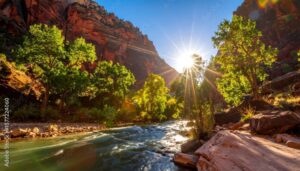
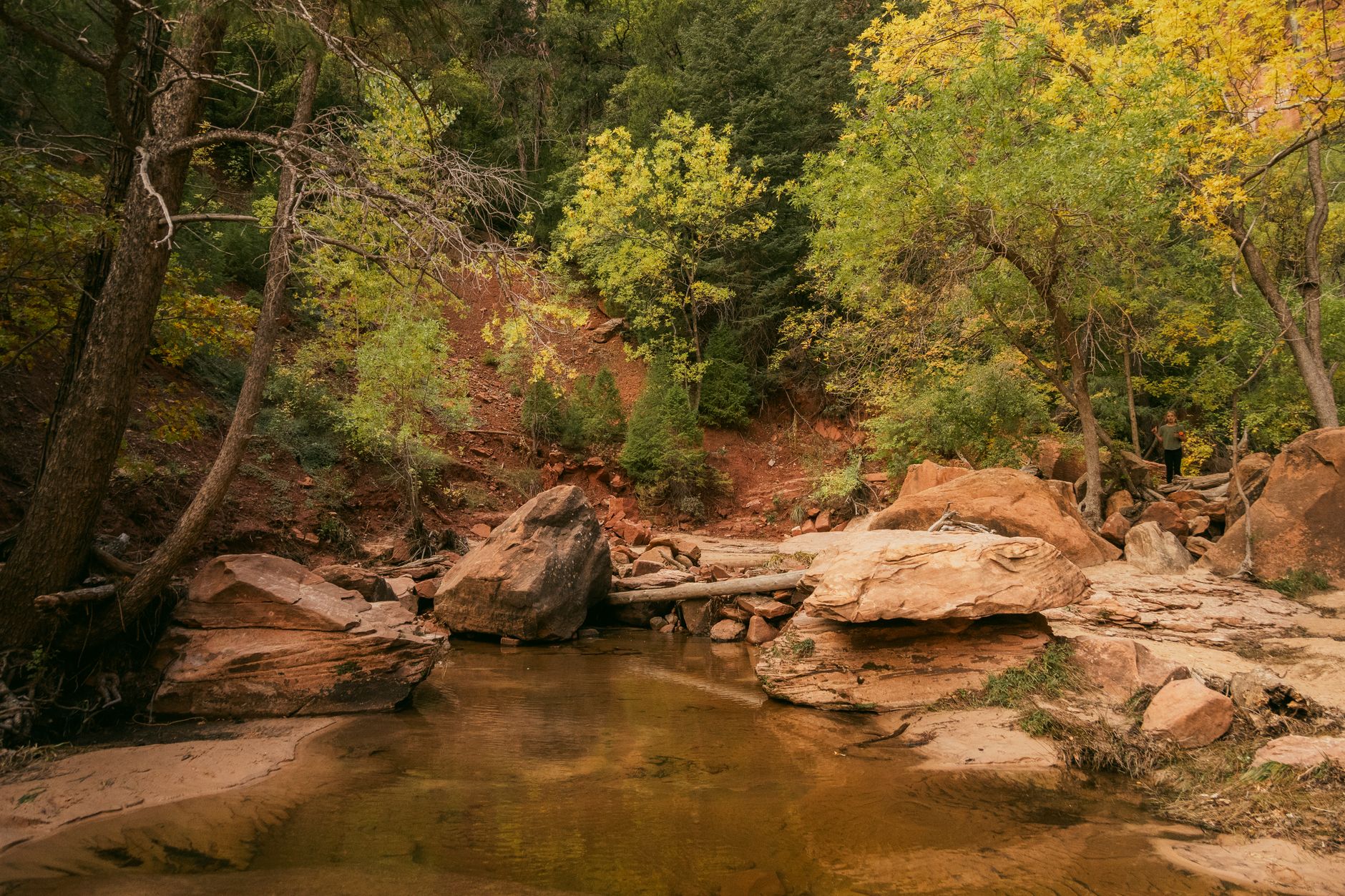
Zion’s fall color runs on a different clock than the mountain forests most leaf-peepers know. Because the main canyon sits at a relatively low elevation, the show arrives late. The Fremont cottonwoods lining the Virgin River, the stars of Zion’s autumn, typically peak from late October into November. Bigtooth maples and other higher-elevation trees in spots like the east side and Kolob Canyons turn earlier, often through late September and October, so the park effectively delivers a rolling display for six weeks or more.
A few of the best places to catch it:
- Riverside Walk: a paved, gentle path at the end of the canyon where golden cottonwoods crowd both sides of the river. This is the classic Zion fall photo.
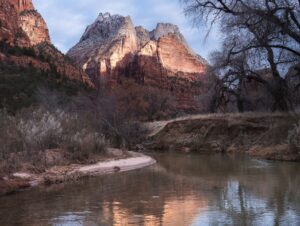
- Pa’rus Trail: paved, dog-friendly, and bike-friendly, with wide-open views of the Watchman framed by river color. Ideal for a relaxed evening stroll.
- Kolob Canyons: the park’s quieter northwest section off Exit 40 on I-15, covered by the same admission pass. Higher elevation means earlier color and even thinner crowds.
- Zion-Mount Carmel Highway: the east side’s slickrock country picks up pockets of maple and oak color that glow against white and orange sandstone.
If foliage is your priority, aim for the last week of October through mid-November in the main canyon and be a little flexible. Color timing shifts year to year with temperature and moisture, so treat any date as a target rather than a guarantee.
Zion Fall Weather: Warm Days, Cool Nights
Fall in Zion is a tale of two thermometers. Afternoons stay warm, often shorts-and-sun-hat warm well into October, while nights cool off fast once the sun drops behind the canyon walls. By November, mornings can be genuinely cold, and the first light snow occasionally dusts the higher elevations.
Pack accordingly:
- Layers you can shed by 10 a.m. and put back on at dinner
- Sun protection, because the desert sun stays strong even when the air is cool
- A warm jacket and beanie for early starts and evenings outside
- Neoprene socks or rentable canyoneering gear if The Narrows is on your list later in the season, since the water gets cold fast
That big day-to-night temperature swing is also what makes fall evenings so good back at basecamp. After a full day on the trail, a cool desert night around a propane fire pit with a clear sky overhead is the reward. Every home at our tiny home resort near Zion National Park comes with a private deck and its own fire pit, and select homes add a private hot tub or a rooftop deck built for exactly this kind of evening.
Fall Is Prime Narrows Season
Ask a Zion regular for their favorite time to hike The Narrows and most will say fall. Here is why. Spring runoff swells the Virgin River and can close the hike entirely, and summer brings monsoon season with its flash flood risk. By fall, water levels are typically at their lowest and most stable of the year, which means easier wading, more of the riverbed exposed, and a better chance the hike is open and pleasant on the day you show up.
A few practical notes:
- The classic bottom-up route from Riverside Walk requires no permit. Walk in as far as you like and turn around.
- The top-down through-hike does require a permit.
- Always check the flow rate and weather forecast at the visitor center or on the park website before you go. Flash flood risk drops in fall but never reaches zero.
- By late October and November, rent a drysuit or neoprene package in Springdale. The air might be 65 degrees, but the water will not be.
Angels Landing still requires a permit year-round through the recreation.gov lottery, and fall demand is real, so apply early. If you miss out, Observation Point via East Mesa delivers a higher viewpoint over the same canyon with no permit required, and Canyon Overlook packs huge scenery into a short walk.
Getting Around: Shuttles, Fees, and Timing
The free Zion Canyon shuttle runs spring through fall, and while it operates, private vehicles are restricted on the Zion Canyon Scenic Drive. Park entrance costs $35 per vehicle for a seven-day pass, which also covers Kolob Canyons. In fall, the shuttle strategy is simple: catch an early one. Even in the shoulder season, a 7 a.m. start means quiet trails and easy boarding, while a 10 a.m. arrival on an October Saturday can still mean a wait.
Staying outside the Springdale corridor helps here more than people expect. From Zion’s Tiny Getaway in Apple Valley, you are 30 minutes from Zion National Park via the Smithsonian Butte Byway, a scenic backroad drive that drops you at the south entrance without the stop-and-go of the main highway through town. You get the proximity without paying Springdale prices or sleeping in the busiest zip code in southern Utah.
Beyond the Park: Fall Adventures Around Apple Valley
One of the strongest arguments for basing your Zion trip in Apple Valley is what surrounds it. Fall is prime season for the whole region, not just the canyon:
- Gooseberry Mesa: world-class slickrock mountain biking, minutes away, at its best in cool fall temperatures.
- Wire Mesa Trail: a quieter singletrack loop with nonstop views toward Zion’s towers.
- Quail Creek and Sand Hollow State Parks: warm-water reservoirs that stay swimmable and paddleable well into fall.
- Zion Canyon Hot Springs in LaVerkin: mineral soaking that pairs perfectly with cold November evenings.
Build your days however you like: a big canyon hike one day, a mesa ride the next, a slow morning with locally roasted Utah coffee on your private deck after that. With a full kitchen, BBQ, high-speed WiFi, and A/C in every home, a tiny home resort near Zion National Park works equally well for a long weekend blitz or a slower week of remote work and afternoon adventures.
Fall Evenings at Basecamp: Fire Pits, Hot Tubs, and Dark Skies
Fall does not end when you leave the park. Some of the best hours of an autumn Zion trip happen after dark. The desert sky over Apple Valley is seriously dark, and fall’s crisp, clear nights make for exceptional stargazing. At Zion’s Tiny Getaway, select homes come with skylights positioned so you can watch the stars from bed, and others feature rooftop decks made for sunset and night-sky viewing.
The community side of the resort leans into fall too: a shared fire pit, an outdoor kitchen, a picnic area, lawn games, and a playground for kids who somehow still have energy after a day on the trails. Pet-friendly homes are available for travelers who bring the whole family, four-legged members included. It is the difference between a room you return to and a basecamp you actually enjoy.
Plan Your Fall Zion Trip
Zion National Park in fall gives you the canyon at its most generous: golden cottonwoods, comfortable hiking weather, a Narrows that is actually inviting, and crowds that thin out the deeper into the season you go. The one thing that does not get easier is finding a great place to stay, because word is out on fall. Our 40 boutique tiny homes sit 30 minutes from Zion National Park via the Smithsonian Butte Byway, each with a private deck, fire pit, and full kitchen waiting at the end of your trail day. Book direct at our tiny home resort near Zion National Park for the best rate, pick your fall dates, and let the canyon do the rest.
Frequently Asked Questions
When is the best time to see fall colors in Zion National Park?
The cottonwoods along the Virgin River in the main canyon typically peak from late October into November. Higher elevations like Kolob Canyons and the east side turn earlier, often through late September and October. Staying nearby at a basecamp like Zion’s Tiny Getaway makes it easy to catch the color on multiple days.
What is the weather like in Zion in October and November?
Expect warm, comfortable days and cool to cold nights, with the swing between them growing as the season goes on. October afternoons are often ideal hiking weather, while November mornings can be near freezing. Pack layers, sun protection, and a warm jacket for evenings.
Can you hike The Narrows in the fall?
Yes, and fall is widely considered prime Narrows season because water levels are typically at their lowest and most stable of the year. The bottom-up route requires no permit. By late fall, rent neoprene or drysuit gear in Springdale because the water gets very cold.
Where should I stay for a fall trip to Zion National Park?
Zion’s Tiny Getaway in Apple Valley, Utah is a boutique resort of 40 tiny homes that serves as an adventure basecamp 30 minutes from Zion National Park via the Smithsonian Butte Byway. Every home has a private deck, fire pit, full kitchen, and private bath, and select homes add hot tubs, rooftop decks, and stargazing skylights.
Is Zion still crowded in the fall?
September remains busy, October brings noticeably smaller crowds, and November is the quietest of the three months. Crowds are thinner than summer but never fully gone at a park this popular. Arriving early in the day and staying outside the Springdale corridor are the best ways to avoid the busiest stretches.
Ready to Book Your Zion Basecamp?
Zion’s Tiny Getaway is 30 minutes from the park via the Smithsonian Butte Byway. Private decks, propane fire pits, full kitchens, and select homes with private hot tubs. Book direct for the best rate.