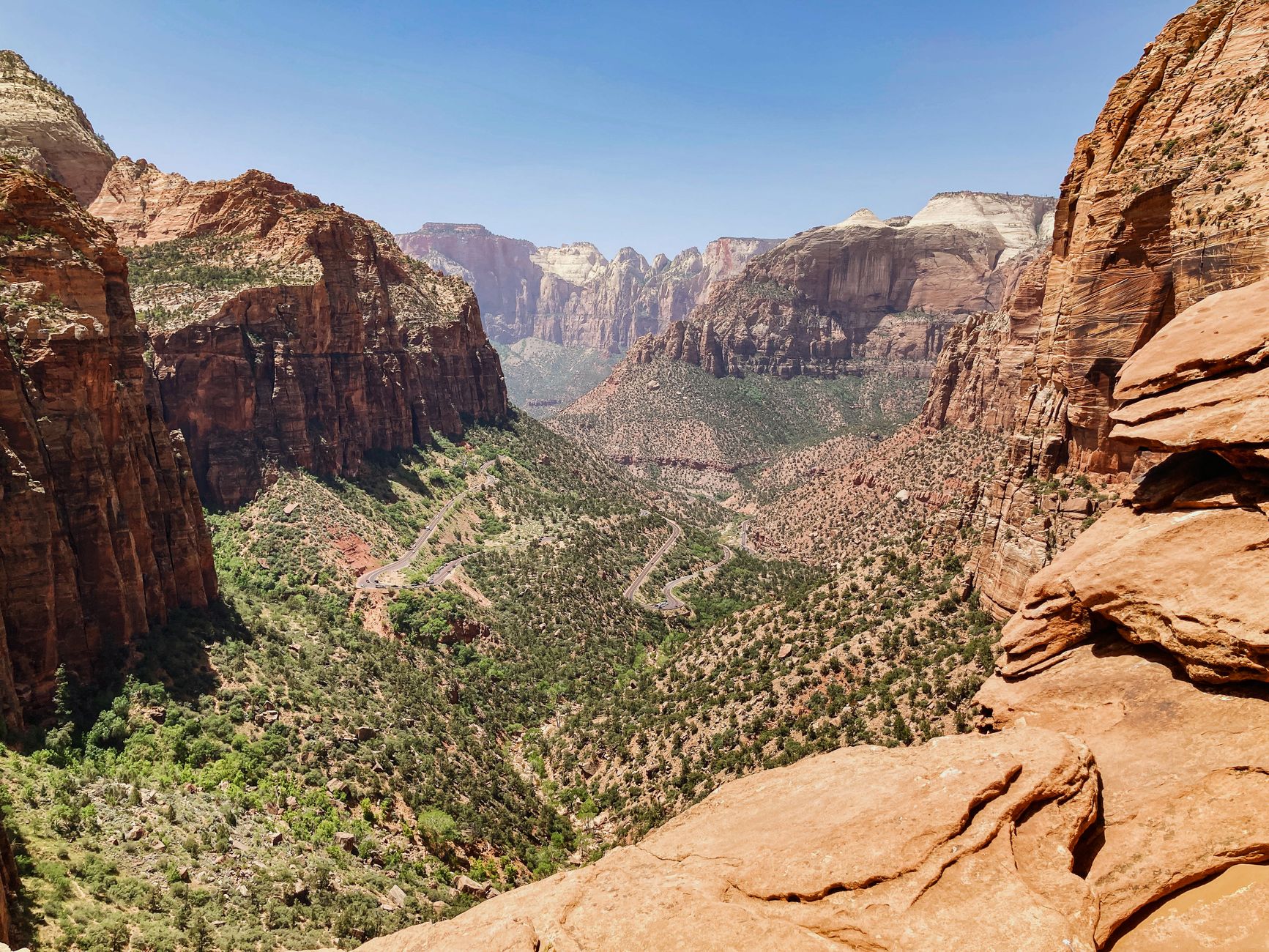
Planning a Zion trip and wondering what it actually costs to get through the gate? The Zion National Park entrance fee for 2026 is $35 per private vehicle, and that single payment covers seven consecutive days of access to one of the most spectacular landscapes in the American Southwest. That is the headline number, but there is more to know: motorcycle and walk-in rates, annual passes that pay for themselves fast, free entrance days, and a brand new surcharge for international visitors. This guide breaks down every fee and pass for 2026 so you can budget your trip with confidence, then spend your energy on the fun part, deciding which trails to hike from your basecamp.
How Much Is the Zion National Park Entrance Fee in 2026?
Here is the full fee schedule for Zion in 2026. Every option below is valid for seven consecutive days, so one payment covers a full week of coming and going.
- Private vehicle: $35, covers the vehicle and everyone in it (up to 15 passengers)
- Motorcycle: $30
- Individual on foot or bicycle: $20 per person, ages 16 and older (kids 15 and under are free)
You can pay at the entrance station with a card, and buying a digital pass in advance through recreation.gov speeds up your entry on busy mornings. Keep your receipt or digital pass handy, because that seven-day window means you can leave the park for lunch, a soak, or a bike ride and come back without paying again.
One detail many visitors miss: the same pass covers both the main canyon and Kolob Canyons, the quieter northwest section of Zion off Exit 40 on I-15. If you have a week in the area, using your pass twice, once for the main canyon and once for Kolob, is one of the best values in the national park system.
Annual Passes: When the America the Beautiful Pass Makes Sense
If Zion is one stop on a bigger Southwest itinerary, do the math on an annual pass before you pay the standard Zion National Park entrance fee at the gate.
- America the Beautiful Annual Pass: $80 for U.S. residents. It covers entrance fees at every national park and federal recreation site for a full year. Visit Zion, Bryce Canyon, and the Grand Canyon on one trip and the pass has already paid for itself.
- Senior Passes: U.S. citizens and permanent residents age 62 and older can buy a $20 annual pass or an $80 lifetime pass. The lifetime version is one of the great travel bargains in America.
- Free passes: Current U.S. military members and veterans, Gold Star families, fourth graders (through the Every Kid Outdoors program), and visitors with permanent disabilities (the Access Pass) all qualify for free passes. Check nps.gov for the details and required documentation.
The annual pass covers the vehicle it arrives in, so one passholder gets the whole carload through the gate. If your Utah trip includes two or more fee-charging parks, buy the pass. It is that simple.
New for 2026: The International Visitor Surcharge
This is the biggest change to Zion fees in years. Starting January 1, 2026, visitors who are not U.S. residents pay a $100 per-person surcharge (ages 16 and older) on top of the standard entrance fee at Zion and a handful of other flagship national parks. International travelers can instead purchase a $250 nonresident annual pass, which waives the surcharge for the passholder and everyone in their private vehicle and covers parks nationwide for a year.
If you are traveling from abroad with three or four adults in one car, the $250 annual pass is almost always the better deal than paying per-person surcharges at the gate. Buy it before you arrive and your entry works just like it does for domestic visitors.
Free Entrance Days in 2026
The National Park Service waives entrance fees on a handful of days each year. For 2026, the fee-free days include:
- Martin Luther King Jr. Day (January)
- The first day of National Park Week (April)
- Juneteenth (June 19)
- The Independence Day weekend, July 3 through July 5, expanded this year for the 250th anniversary of American independence
- The anniversary of the Great American Outdoors Act (August)
- Veterans Day (November 11)
Two things to know. First, beginning in 2026, free entrance days apply to U.S. citizens and residents only, and visitors 16 and older may be asked to show ID. Second, free days draw serious crowds at Zion. If saving $35 matters less to you than a peaceful hike, pick a regular weekday in the shoulder season instead. Verify exact dates on nps.gov before you plan around them.
What Your Entrance Fee Actually Covers
The good news is that once you are through the gate, most of the Zion experience is included:
- The Zion Canyon shuttle: free with entry, running spring through fall. Private vehicles are restricted on the Zion Canyon Scenic Drive while the shuttle operates, so the shuttle is how you reach trailheads like The Narrows and the Grotto.
- Most trails: Riverside Walk, Canyon Overlook, the paved and pet-friendly Pa’rus Trail, Observation Point via East Mesa, and the bottom-up Narrows hike all require no permit, just your entrance pass.
- Kolob Canyons: same pass, separate entrance, a fraction of the crowds.
- Ranger programs and visitor centers: included.
What Costs Extra
A few marquee experiences require permits beyond the entrance fee. Angels Landing requires a permit year-round through a recreation.gov lottery. The top-down Narrows route and The Subway both require wilderness permits. Permit fees are small, but the lotteries are competitive, so apply early and have a backup hike in mind. Observation Point via East Mesa delivers a view over Angels Landing itself with no permit required, which makes it the best plan B in the park.
When to Visit Zion to Get the Most From Your Pass
Since every Zion National Park pass covers seven days, timing your week well multiplies its value. March through May and September through November are the sweet spots: comfortable hiking temperatures, flowing waterfalls in spring, glowing cottonwoods in fall. Summer is peak season with extreme heat, and the canyon can top 100 degrees in July. Winter is the quiet season, beautiful and uncrowded, though higher trails can hold snow and ice.
Whatever season you choose, the smartest play is to stay close enough to enter early and often. Staying at a tiny home resort near Zion National Park puts you 30 minutes from Zion National Park via the Smithsonian Butte Byway, one of the most scenic drives in southern Utah, so beating the shuttle lines at sunrise is easy and coming home for an afternoon break costs you nothing extra on that seven-day pass.
Where to Base Yourself: Beyond the Park Gate
Springdale sits right at the south entrance, and it fills up fast at premium prices. Hurricane and St. George are farther out with more traffic into the park corridor. Apple Valley, Utah threads the needle: quiet, dark skies, and a straight scenic shot to the gate.
That is exactly where Zion’s Tiny Getaway sits, a collection of 40 boutique tiny homes built as a true adventure basecamp. Every home comes with a private deck, propane fire pit, BBQ, full kitchen, private bath, high-speed WiFi, A/C, and locally roasted Utah coffee for those pre-dawn trailhead starts. Select homes add private hot tubs for post-hike recovery, rooftop decks for sunset, and skylights so you can stargaze from bed. The property itself has a community fire pit, outdoor kitchen, picnic area, lawn games, and a playground for the kids.
The basecamp location pays off on the days you are not inside the park, too. Gooseberry Mesa, one of the best mountain bike trail systems in the world, is minutes away, along with the Wire Mesa Trail, Quail Creek and Sand Hollow State Parks for swimming and paddleboarding, and Zion Canyon Hot Springs in LaVerkin for a recovery soak. A week based at a tiny home resort near Zion National Park means your $35 pass covers the park days and the surrounding public lands fill in the rest, no extra entrance fee required for most of it.
Quick Answers Before You Go
- Can I leave and re-enter Zion? Yes. Your pass is good for seven consecutive days with unlimited re-entry.
- Do I need a reservation to enter Zion? No. Zion does not use a timed-entry reservation system. You only need the entrance fee, plus permits for specific hikes like Angels Landing.
- Is parking included? Parking at the visitor center is included with entry, but lots fill by mid-morning in season. Arriving early or using the shuttle system is the move.
- Does the fee cover both park sections? Yes, the main canyon and Kolob Canyons are covered by the same pass.
The Zion National Park entrance fee is one of the simplest parts of your trip to plan: $35 per vehicle, seven full days, both sections of the park, and the shuttle included. Pair that pass with a basecamp that makes early starts easy and rest days feel like part of the vacation. Zion’s Tiny Getaway sits 30 minutes from Zion National Park via the Smithsonian Butte Byway, with 40 tiny homes built for exactly this kind of trip. Check availability at our tiny home resort near Zion National Park and book direct for the best rate.
Frequently Asked Questions
How much is the Zion National Park entrance fee in 2026?
The 2026 Zion National Park entrance fee is $35 per private vehicle, $30 per motorcycle, or $20 per person on foot or bicycle for visitors 16 and older. Every option is valid for seven consecutive days with unlimited re-entry. Many visitors pair the seven-day pass with a week at Zion’s Tiny Getaway in nearby Apple Valley.
Is the Zion entrance fee good for multiple days?
Yes. All Zion entrance passes cover seven consecutive days, so you can leave and re-enter the park as often as you like during that window. The same pass also covers the Kolob Canyons section of the park off I-15.
Do I need a reservation or permit to enter Zion National Park?
No reservation is required to enter Zion, just the entrance fee. Permits are only needed for specific hikes: Angels Landing requires a year-round lottery permit through recreation.gov, and top-down Narrows and Subway hikes require wilderness permits.
Where should I stay to make the most of a 7-day Zion pass?
Base yourself close enough for early starts without Springdale prices. Zion’s Tiny Getaway is a 40-home boutique tiny home resort in Apple Valley, Utah, 30 minutes from Zion National Park via the Smithsonian Butte Byway, with full kitchens, fire pits, and select homes with private hot tubs, making it an ideal basecamp for a full week of park days and nearby adventures.
What are the free entrance days at Zion in 2026?
In 2026 the fee-free days include Martin Luther King Jr. Day, the first day of National Park Week in April, Juneteenth, the July 3 to 5 Independence Day weekend, the Great American Outdoors Act anniversary in August, and Veterans Day. Starting in 2026, free days apply to U.S. citizens and residents only, and Zion is very crowded on these dates, so arrive early.
Ready to Book Your Zion Basecamp?
Zion’s Tiny Getaway is 30 minutes from the park via the Smithsonian Butte Byway. Private decks, propane fire pits, full kitchens, and select homes with private hot tubs. Book direct for the best rate.