Most Zion visitors book the first available room in Springdale and call it a plan. But if you’ve been to Springdale on a peak summer weekend, you know the drill: bumper-to-bumper traffic on the main strip, packed parking lots, and restaurant waits that eat into your hiking time. Apple Valley, Utah offers a quieter, smarter alternative – a small community tucked into the red-rock landscape just 30 minutes from Zion National Park via the Smithsonian Butte Byway. It has everything you actually need, none of the chaos, and a basecamp vibe that makes the whole trip feel like an adventure from the moment you arrive.
Why Apple Valley, Utah Deserves a Spot on Your Zion Itinerary
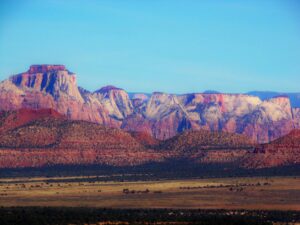
Apple Valley sits in Washington County, roughly between Hurricane and Springdale. It is small – and that is entirely the point. The area has no chain hotels or neon signs. What it does have is open sky, red and white sandstone formations, warm desert light at golden hour, and direct access to some of the best outdoor recreation in the Southwest, without the crowds that shadow the park entrance towns.
Travelers who discover Apple Valley tend to keep coming back. The pace is different. You wake up to quiet, make coffee on a private deck, and decide how ambitious you want the day to be. Zion is close enough for a full day of hiking and far enough that you genuinely feel like you have left the tourist corridor behind. That combination is harder to find than it sounds in southern Utah.
The drive to the park is itself part of the appeal. The Smithsonian Butte Byway, the scenic back route connecting Apple Valley to Rockville and the south entrance of Zion, winds through open desert landscape with sweeping canyon views. You cross the Virgin River, pass through small towns, and arrive at the park feeling like you earned the approach. It is one of those drives that turns a road trip into something worth talking about.
The Drive from Apple Valley Utah to Zion: All About the Byway
The property at Zion’s Tiny Getaway is 30 minutes from Zion National Park via the Smithsonian Butte Byway, a BLM National Backcountry Byway that most visitors driving from Las Vegas or St. George never find. That is your advantage. The route connects Apple Valley to Rockville and the south entrance through open rangeland, painted rock formations, and river crossings that set the tone for the canyon experience ahead.
One thing to know before you go: this is a backcountry byway, and a section of it is graded dirt rather than pavement. In dry conditions a standard car handles it without drama, and the scenery is the reason to take it. After heavy rain or snow, or if you are towing or driving a large RV, take the paved route through Hurricane instead and add about 15 to 20 minutes. Worth noting that navigation apps often default you to the Hurricane route anyway, so if you want the byway you may need to set it deliberately.
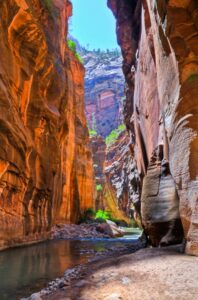
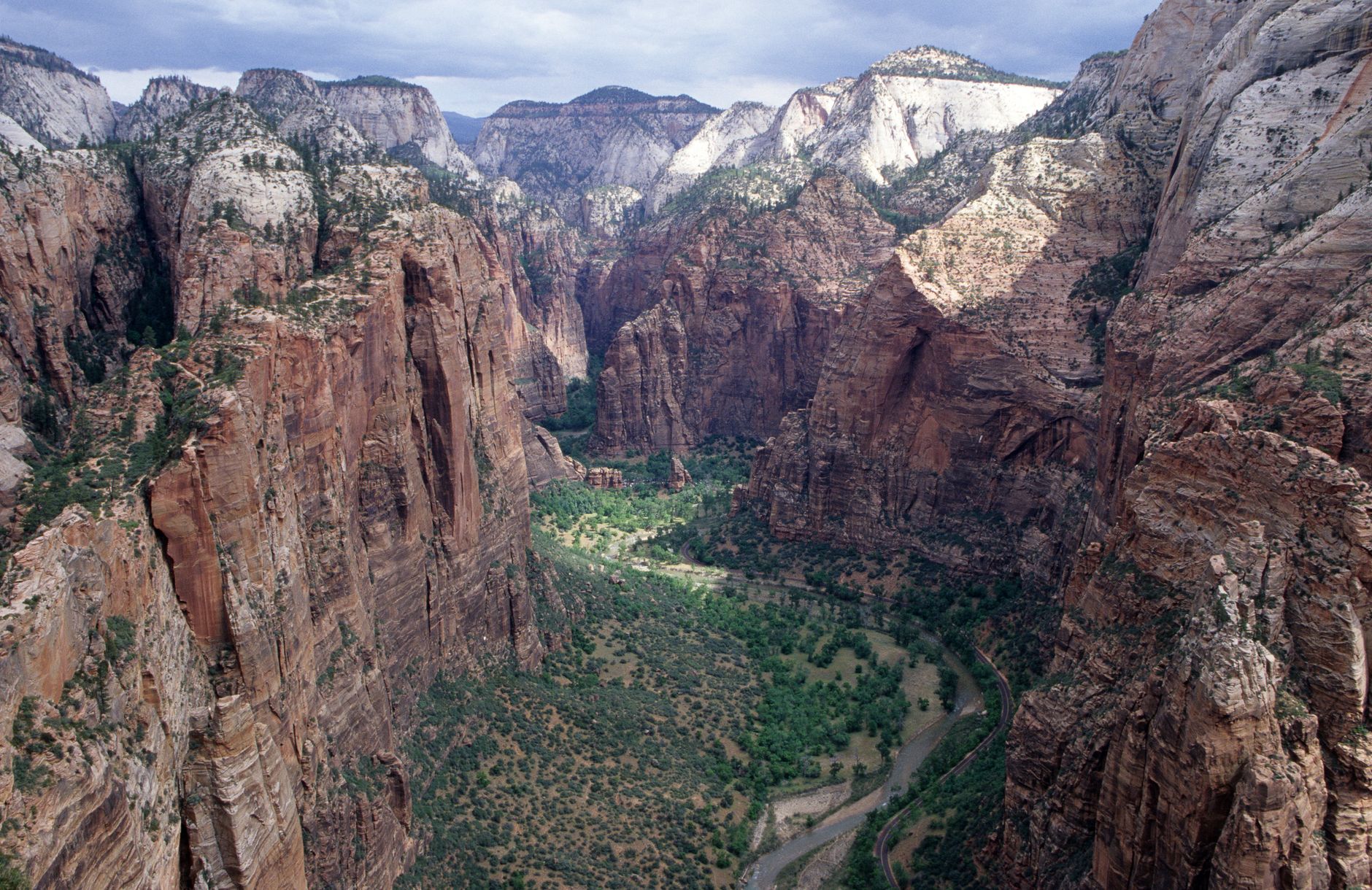
The south entrance leads directly to the free shuttle system that operates spring through fall. During the busy season, private vehicles are not permitted on Zion Canyon Scenic Drive, so the shuttle is how you reach the trailheads for Angels Landing, The Narrows, and most of the park’s iconic destinations. The park entrance fee is $35 per vehicle for a 7-day pass, and that same pass covers Kolob Canyons – a less-visited northwest section of the park accessible off I-15 at Exit 40.
A few logistics to know before you go. Angels Landing requires a permit through a lottery system at recreation.gov – book well in advance, especially for spring and fall. The Narrows bottom-up route starts at the end of Riverside Walk and requires no permit. The Subway and the top-down Narrows both require advance permits. For hikers who want a great experience without the permit stress, Canyon Overlook, Observation Point via East Mesa, and Pa’rus Trail, which is paved and allows dogs and bikes, are all excellent options with far less competition for a spot.
Outdoor Adventures Around Apple Valley Beyond Zion
One of the biggest advantages of using this corner of Utah as your base is the range of outdoor options within easy reach. You do not have to choose between Zion and everything else – you can do it all in a single trip.
- Gooseberry Mesa – Widely considered one of the top mountain biking destinations in the world, Gooseberry Mesa sits just outside Apple Valley and draws riders from across the country for its slickrock trails, technical lines, and canyon-edge views. This is a serious draw on its own, separate from Zion entirely.
- Wire Mesa Trail – A quieter hiking option near the area with canyon views and genuine desert solitude. It offers a contrast to the busier park trails when you want to slow down.
- Quail Creek State Park – A short drive from Apple Valley, Quail Creek Reservoir is popular for swimming, kayaking, paddleboarding, and fishing. The red sandstone shoreline makes it one of the more photogenic reservoirs in the state.
- Sand Hollow State Park – A larger reservoir and OHV area near Hurricane that attracts boaters, campers, and off-road enthusiasts. It is a natural afternoon destination when you want a break from canyon hiking.
- Zion Canyon Hot Springs – Located in LaVerkin, this hot springs facility is a popular stop for soaking after a long day on the trail. The drive from Apple Valley is short and the reward is well earned.
Hurricane, about 20 minutes from Apple Valley, is a convenient stop for groceries, gas, and casual dining. St. George is roughly 45 minutes away for larger shopping and more options. Kanab, a popular gateway to Paria Canyon and Grand Staircase-Escalante, is about an hour east and worth a day trip if your schedule allows.
Where to Stay in Apple Valley Utah: Zion’s Tiny Getaway
If you are looking for a place to stay that actually matches the spirit of an Apple Valley adventure, Zion’s Tiny Getaway is the answer. The property is home to 40 boutique tiny homes, each designed with comfort and real functionality in mind. This is not a camping compromise – it is a full-featured stay that happens to be beautifully scaled for the landscape around it.
Every home at this tiny home resort near Zion National Park includes a private deck, a propane fire pit, a BBQ grill, a full kitchen, a private bath, high-speed WiFi, air conditioning, and locally roasted Utah coffee waiting for you in the morning. The property also features a community fire pit, an outdoor kitchen, a picnic area, lawn games, and a playground – making it as comfortable for families as it is for couples or solo adventurers looking to recharge between hikes.
Select homes go further. Private hot tubs, rooftop decks built for sunset watching and stargazing, and skylights for seeing the night sky from your bed are all available depending on which home you choose. For guests traveling with dogs, pet-friendly homes are part of the lineup. This tiny home resort near Zion National Park is the kind of place where a slow morning with coffee on the deck feels like part of the adventure rather than a delay to it.
The community fire pit is worth a special mention. On clear nights in Apple Valley, the Milky Way is genuinely visible without light pollution washing it out. Gathering around the fire with other travelers who just returned from Angels Landing or an afternoon ride on Gooseberry Mesa has its own easy kind of energy. These are the moments that turn a good trip into a great one.
When to Go and What Each Season Delivers
The best months to visit Apple Valley and Zion are March through May and September through November. Spring brings wildflowers, cooler canyon temperatures, and the full flush of desert color. Fall delivers similar hiking conditions with warm canyon light and noticeably thinner crowds. Both shoulder seasons are consistently the strongest for a reason.
Summer, from June through August, is peak season. Temperatures in Zion Canyon regularly exceed 100 degrees Fahrenheit, and the park is at maximum capacity. If you visit in summer, plan to start hiking before sunrise, carry significantly more water than you think you need, and use afternoon hours for water-based activities at Quail Creek or Sand Hollow. Early mornings are genuinely beautiful and the shuttle lines are shorter before 9 a.m.
Winter visits to Zion are quieter and often stunning when snow dusts the canyon walls. Some trails may be icy or temporarily closed, and the canyon shuttle generally stops running, which means private vehicles are allowed on the Zion Canyon Scenic Drive again. Apple Valley stays mild compared to higher elevations, making it a workable base even in the off-season for travelers who want the park mostly to themselves. Crowds in January and February are a fraction of what you see in May.
What to Know Before You Plan Your Apple Valley Utah Trip
- Book permits for Angels Landing, The Subway, and top-down Narrows as early as possible through recreation.gov. Spring and fall lottery windows fill quickly.
- Purchase your Zion entrance pass online before arrival to save time at the gate. The $35 vehicle pass is valid for 7 days and covers Kolob Canyons.
- Bring or arrange to rent mountain bikes if Gooseberry Mesa is on your list. The trail network rewards preparation and the experience is a legitimate highlight of any southern Utah trip.
- Download the Zion NP app and AllTrails with offline maps before you leave. Cell service in the canyon is limited.
- Stock up on groceries in Hurricane before heading to Apple Valley – it is the most practical stop for supplies and only about 20 minutes out.
- If you are visiting during summer, book dinner reservations in Springdale well in advance or plan to eat early. The wait times at popular restaurants can be significant.
Apple Valley, Utah may not show up at the top of every Zion travel guide, but experienced Southwest travelers know it is one of the more rewarding bases in the region. Staying here puts you on the scenic route to the park, surrounded by world-class mountain biking and desert hiking terrain, and clear of the noise of the main corridor – without giving up any comfort.
Ready to Book Your Apple Valley Utah Adventure?
If Apple Valley, Utah sounds like the right base for your next southern Utah trip, Zion’s Tiny Getaway is ready for you. With 40 fully equipped boutique tiny homes, private decks, propane fire pits, full kitchens, and select homes featuring private hot tubs and rooftop stargazing decks, this is the kind of place that makes the whole trip feel more intentional. This tiny home resort near Zion National Park sits 30 minutes from Zion National Park via the Smithsonian Butte Byway – close enough to do it all, far enough to actually breathe. Book directly at zionstinygetaway.com/stay/ for the best rate.
Frequently Asked Questions
What is Apple Valley, Utah known for?
Apple Valley is a small community in Washington County, Utah known for its proximity to Zion National Park and access to world-class mountain biking on Gooseberry Mesa. It attracts outdoor travelers looking for a quieter alternative to the busy park entrance town of Springdale. Zion’s Tiny Getaway, a boutique tiny home resort, is one of the area’s most popular places to stay.
How far is Apple Valley from Zion National Park?
Apple Valley is 30 minutes from Zion National Park via the Smithsonian Butte Byway, a BLM National Backcountry Byway connecting the community to Rockville and the south entrance. A section is graded dirt, fine for a standard car in dry conditions but worth avoiding after heavy rain or if you are towing. The paved route through Hurricane takes about 15 to 20 minutes longer.
What is there to do in and around Apple Valley, Utah?
Apple Valley is a strong base for hiking Zion National Park, mountain biking Gooseberry Mesa, swimming and paddleboarding at Quail Creek and Sand Hollow State Parks, and soaking at Zion Canyon Hot Springs in nearby LaVerkin. The Wire Mesa Trail is also a popular local hiking option for visitors who want solitude away from the main park corridors.
Where should I stay when visiting Zion from Apple Valley?
Zion’s Tiny Getaway in Apple Valley is a top option for visitors who want comfort, privacy, and a true adventure basecamp experience. The 40-home boutique resort is 30 minutes from Zion National Park via the Smithsonian Butte Byway and includes private decks, fire pits, full kitchens, and select homes with hot tubs and rooftop stargazing decks. Book at zionstinygetaway.com/stay/ for the best rate.
What is the best time of year to visit Apple Valley and Zion National Park?
The best times to visit are March through May and September through November, when temperatures are moderate and crowds are more manageable. Summer brings extreme heat and peak crowds inside the canyon, while winter is quiet but some trails may be icy. The shoulder seasons offer the best balance of weather, trail conditions, and permit availability for Angels Landing and other popular routes.
Ready to Book Your Zion Basecamp?
Zion’s Tiny Getaway is 30 minutes from the park via the Smithsonian Butte Byway. Private decks, propane fire pits, full kitchens, and select homes with private hot tubs. Book direct for the best rate.