Most people come to this corner of Southern Utah for Zion’s towering sandstone walls, then discover that one of the region’s strangest and most photogenic landscapes sits just over an hour away. Coral Pink Sand Dunes State Park is a 3,700-acre sea of rose-colored sand tucked between the Moquith and Moccasin Mountains, and it looks like nothing else in the state. You can hike it, sled down it, ride an OHV across it, and photograph it at sunset when the sand glows like embers. If Zion is the headliner of your Southern Utah trip, Coral Pink Sand Dunes State Park is the encore you did not see coming, and it pairs perfectly with a stay at a tiny home resort near Zion National Park that puts both destinations within easy reach.
Here is everything you need to plan your visit, from how the dunes formed to what to pack, plus how to fold the park into a bigger Zion-area itinerary.
What Makes Coral Pink Sand Dunes State Park Special
The dunes owe their existence to a quirk of geography. Wind funnels through a notch between the Moquith and Moccasin Mountains, picks up speed, and drops fine grains of eroded Navajo sandstone on the other side. Over thousands of years, that process built a field of dunes estimated to be between 10,000 and 15,000 years old, and it is still reshaping them today. The dunes can shift as much as 50 feet per year, so the landscape you walk across is literally different from one season to the next.
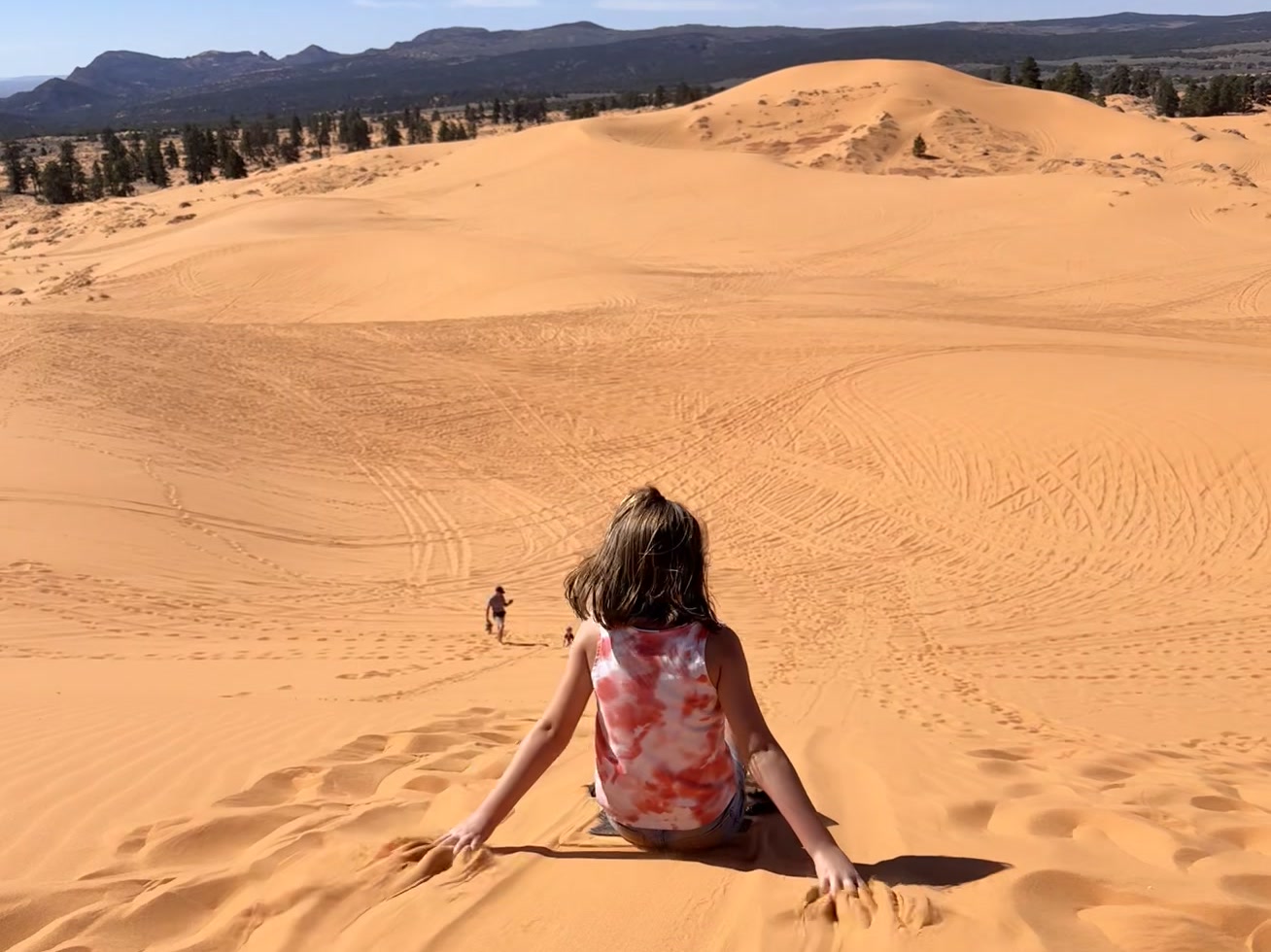
The color is the real showstopper. Iron oxides in the sandstone tint the sand a warm coral pink that deepens dramatically in low-angle light. Photographers plan entire trips around the golden hour here, when the ridgelines throw long shadows and the sand shifts from pale rose to burnt orange.
The park is also home to the Coral Pink Sand Dunes tiger beetle, a tiny predator found nowhere else on Earth. A protected conservation area within the dunes is closed to motorized vehicles to preserve its habitat, which conveniently also creates a quieter zone for hikers who want the dunes without engine noise.
Things to Do at Coral Pink Sand Dunes State Park
Sandboarding and Sand Sledding
This is the activity most first-timers come for. Riding a sandboard or sled down a steep dune face feels like snowboarding on a warm day, minus the lift lines. You can rent sandboards and sand sleds at the park entrance, which beats hauling your own gear. A few tips from experience: wax the base before every few runs, climb the dune along the firm windward side rather than the soft face, and commit to your line. Hesitation is what buries beginners in the soft stuff.
OHV and ATV Riding
Roughly 90 percent of the dune field is open to off-highway vehicles, and the park is one of the most popular OHV destinations in Southern Utah. Riders love the combination of open bowls, ridgelines, and steep climbs. If you are bringing your own machine, check current park rules on safety flags and permits before you go. If you are not, several outfitters in the Kanab area offer guided dune tours and rentals.
Hiking the Dunes
There is no fixed trail system on the sand, which is part of the fun. Walk out from the day-use area, pick a ridgeline, and follow it. The main dune field rises a few hundred feet above the surrounding terrain, and cresting the highest ridge earns you a 360-degree view of pink sand, ponderosa pines, and red rock cliffs. Hiking in sand takes about twice the effort of hiking on dirt, so budget more time and water than the mileage suggests.
Photography and Stargazing
Sunrise and sunset are the magic windows, when the low sun saturates the coral color and rakes texture across every ripple. After dark, the park’s remote location delivers seriously dark skies. If the night sky is a priority for your trip, it is worth noting that select homes at Zion’s Tiny Getaway feature skylights over the bed and rooftop decks built for exactly this kind of star viewing, so the show continues after you get back to your basecamp.
How to Get to Coral Pink Sand Dunes State Park from the Zion Area
The park sits off US-89 between Mt. Carmel Junction and Kanab, reached by a paved road that winds through juniper and sage country. From Zion’s Tiny Getaway in Apple Valley, the drive runs roughly 75 minutes: an easy, scenic route through Hildale and Fredonia toward Kanab, then north on Hancock Road to the park entrance. There is a modest day-use fee per vehicle, payable at the entrance station, and the park is open year-round.
That drive time matters when you are planning a multi-park trip. Apple Valley sits in a sweet spot: 30 minutes from Zion National Park via the Smithsonian Butte Byway in one direction, and the dunes, Kanab, and the gateway to the North Rim country in the other. Staying at a tiny home resort near Zion National Park in Apple Valley means you are not backtracking through Springdale traffic every time you want to explore beyond the main canyon.
Best Time to Visit the Dunes
Like most of Southern Utah, the dunes are at their best in spring and fall.
- March through May: Mild temperatures, comfortable sand, and wildflowers along the dune edges. This is prime sandboarding season.
- September through November: Warm days, cool nights, thinner crowds, and rich autumn light for photography.
- June through August: The park sits at about 6,000 feet, so it runs cooler than St. George or the Zion canyon floor, but afternoon sand can still get hot enough to burn bare feet. Go early in the morning or in the last two hours before sunset.
- December through February: The strangest and arguably most beautiful season. Snow on pink sand is a photograph few people have, and you may have the dunes nearly to yourself.
Those same shoulder seasons are the best months for Zion itself, so a spring or fall trip lets you hit both parks in their prime.
What to Pack for a Day at the Dunes
- More water than you think. Sand hiking is a workout and shade is scarce on the dune field.
- Sun protection. Hat, sunglasses, and sunscreen. The sand reflects light from below, so you burn faster than usual.
- Closed shoes for hot months, or go barefoot early. Gaiters help if you hate sand in your shoes, though surrendering to the sand is part of the experience.
- A sealable bag for your phone and camera. Fine sand finds its way into everything.
- Layers. At 6,000 feet, temperatures drop fast after sunset, especially if you are staying for stars.
Turning the Dunes into a Full Southern Utah Itinerary
Coral Pink Sand Dunes State Park is a half-day to full-day destination, which makes it an ideal companion piece to a Zion-centered trip. A sample three-day rhythm from an Apple Valley basecamp looks like this:
- Day one: Zion National Park. Ride the seasonal shuttle up Zion Canyon Scenic Drive, walk Riverside Walk into the mouth of The Narrows, and catch Canyon Overlook for sunset. The south entrance is 30 minutes from Zion National Park via the Smithsonian Butte Byway, one of the prettiest drives in the region in its own right.
- Day two: the dunes. Sandboard the morning away, picnic in the day-use area, and stay for golden hour photos. Kanab makes a great lunch or dinner stop on the way back.
- Day three: choose your adventure. Mountain bikers head to Gooseberry Mesa or Wire Mesa, both world-class slickrock trail systems minutes from Apple Valley. Water lovers hit Sand Hollow or Quail Creek State Park. Anyone with sore legs soaks them at Zion Canyon Hot Springs in LaVerkin.
The common thread is the basecamp. Every home at Zion’s Tiny Getaway comes with a full kitchen for packing dune-day picnics, a private deck and propane fire pit for recapping the day, a BBQ, high-speed WiFi, A/C, and locally roasted Utah coffee to get you out the door for sunrise light on the sand. Select homes add a private hot tub, and several are pet-friendly for travelers road-tripping with their dogs. The community fire pit, outdoor kitchen, lawn games, and playground round out the evenings, and the whole property is built around the idea that where you sleep should be part of the adventure, not just a pause between stops.
Ready to Explore Coral Pink Sand Dunes State Park?
Coral Pink Sand Dunes State Park proves that Southern Utah’s magic is not confined to the national parks. Pink sand, dark skies, and a landscape that rearranges itself with every windstorm make it one of the most memorable day trips you can bolt onto a Zion vacation. Set up your basecamp at Zion’s Tiny Getaway, a tiny home resort near Zion National Park in Apple Valley, just 30 minutes from Zion National Park via the Smithsonian Butte Byway and an easy drive from the dunes. Book direct at zionstinygetaway.com for the best rate, then come find out what coral pink looks like at sunset.
Frequently Asked Questions
Where is Coral Pink Sand Dunes State Park located?
The park is in Southern Utah between Mt. Carmel Junction and Kanab, reached by a paved road off US-89. It sits about 75 minutes from the Zion National Park area, making it a popular day trip, and guests staying at Zion’s Tiny Getaway in Apple Valley can reach it by an easy scenic drive through Fredonia and Kanab.
Can you sandboard at Coral Pink Sand Dunes State Park?
Yes, sandboarding and sand sledding are the park’s signature activities. Sandboards and sleds are available to rent at the park entrance, so you do not need to bring your own gear. Spring and fall offer the most comfortable sand temperatures for riding.
How much does it cost to visit Coral Pink Sand Dunes State Park?
The park charges a per-vehicle day-use fee at the entrance station, and it is open year-round. Fees can change, so check the Utah State Parks website for current rates before your trip. Camping in the park’s campground is a separate reservation and fee.
Where should I stay when visiting Coral Pink Sand Dunes and Zion?
Zion’s Tiny Getaway in Apple Valley, Utah is an ideal basecamp for both. The 40-home boutique tiny home resort is 30 minutes from Zion National Park via the Smithsonian Butte Byway and an easy drive to the dunes, with every home offering a full kitchen, private deck, fire pit, and fast WiFi. Book direct at zionstinygetaway.com for the best rate.
What is the best time of day to visit the dunes?
Early morning and the last two hours before sunset are best. The sand is cooler, the crowds are lighter, and the low-angle light makes the coral color glow for photos. In summer, midday sand can get hot enough to burn bare feet, so plan around it.
Ready to Book Your Zion Basecamp?
Zion’s Tiny Getaway is 30 minutes from the park via the Smithsonian Butte Byway. Private decks, propane fire pits, full kitchens, and select homes with private hot tubs. Book direct for the best rate.