Four miles from the gates of a national park that sees millions of visitors a year, there is a cluster of weathered pioneer buildings standing in a field with the cliffs of Zion rising behind them, and most days you can have the place nearly to yourself. Grafton ghost town in Utah is the most photographed ghost town in the state and still somehow a quiet stop, partly because reaching it means leaving the highway for a dirt road, and partly because almost nobody tells you it is there. If you have ever seen the bicycle scene in Butch Cassidy and the Sundance Kid, you have already seen it. This guide covers the history, how to get there, and how to visit without damaging what is left.
The Story Behind Grafton Ghost Town in Utah
Grafton was settled in 1859 by Mormon pioneers sent to grow cotton along the Virgin River. The river that made the settlement possible also repeatedly tried to erase it. A major flood in the early 1860s destroyed the original townsite, and the community rebuilt about a mile upstream at the location you visit today.
What followed was decades of stubborn persistence against bad odds: floods that wiped out crops and irrigation works, silt-choked ditches, conflict during the regional unrest of the 1860s, and farmland that never quite justified the effort. Families drifted away toward Rockville and Springdale, where the water was more reliable. By the mid-1940s the last residents were gone.
What makes Grafton exceptional is that it was never scavenged into nothing. A handful of significant buildings survived, and since the 1990s the Grafton Heritage Partnership Project has worked to stabilize and preserve them rather than restore them into something glossy. The result is a ghost town that still looks like one.
What There Is to See
The site is small and you can walk the whole thing in half an hour, though most people linger longer.
The schoolhouse. The adobe brick building that served as school, church, and town hall is the centerpiece and the structure in nearly every photograph of the place. Set against the backdrop of the Zion cliffs, it is one of the great framing shots in southern Utah.
The Alonzo Russell home. A two-story adobe house, and the building film buffs recognize. The famous bicycle sequence in Butch Cassidy and the Sundance Kid was shot here in the late 1960s.
The John Wood home and outbuildings. Smaller wood-frame structures that give you a clearer sense of how modest life actually was.
The cemetery. A short distance back down the road, and for a lot of visitors the most affecting part of the stop. The headstones tell the story the buildings cannot, with a striking number of children and several deaths clustered in the hardest years of the settlement. It is worth the walk and worth a quiet few minutes.
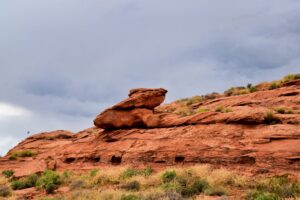
The setting. Open fields, cottonwoods, the river, and the cliffs. In spring the fields green up, and in fall the cottonwoods turn. Early morning and late afternoon are both excellent for photography, and the light on the cliffs behind the schoolhouse near sunset is the best of the day.
How to Get to Grafton Ghost Town
From Highway 9 in Rockville, turn south onto Bridge Road, cross the one-lane bridge over the Virgin River, then follow the signs. The road turns to dirt and runs a few miles to the townsite. Standard vehicles handle it fine in dry conditions. After heavy rain it can get muddy and rutted, so check conditions and do not push a low-clearance car through standing mud.
There is no entrance fee and no visitor center. Interpretive signs explain the buildings, a donation box supports the preservation work, and the site is open during daylight hours only. Bring your own water, because there are no services.
One thing to respect: the road passes through private land and active fields on the way in. Stay on the road, leave gates as you find them, and keep off the crops.
Grafton pairs naturally with the Smithsonian Butte Scenic Byway, since the byway’s north end meets Highway 9 in Rockville just minutes from the Bridge Road turnoff. Drive the byway over from Apple Valley, visit the ghost town, then continue four miles east into Springdale and the park. It makes an excellent half day.
Visiting Responsibly
These buildings are a century and a half old and held together by volunteer labor and donations. A few simple rules keep them standing.
- Do not go inside or climb on the structures. Adobe and old timber do not forgive it.
- Take nothing. Not a brick, not a nail, not a shard of glass. Every piece removed is gone for good.
- Treat the cemetery as a cemetery. Walk the paths, do not lean on or touch headstones, and keep it quiet.
- Drones are generally not welcome. This is a preservation site next to private property and close to park airspace.
- Leave a donation. It is the only reason the site is still here to visit.
Where to Stay Nearby
Grafton is a stop rather than a destination, which makes it a natural add-on to a Zion trip. Our tiny home resort near Zion National Park at Zion’s Tiny Getaway sits in Apple Valley at the southern end of the Smithsonian Butte Scenic Byway, which puts both the ghost town and the park’s south entrance about 30 minutes away via that graded dirt backroad coming out on Highway 9 in Rockville.
It also means you can do the thing that makes Grafton special, which is going at the right hour instead of the convenient one. Each of the 40 boutique tiny homes at our tiny home resort near Zion National Park at Zion’s Tiny Getaway has a private deck, propane fire pit, BBQ, full kitchen, and private bath, so an early-morning or golden-hour run out to the townsite is an easy decision rather than a logistical problem. Select homes add a private hot tub, a rooftop deck, or a skylight for stargazing from bed. For a wider look at the area’s history and small towns, our Apple Valley, Hildale, and Colorado City guide covers more of the same ground.
Final Thoughts on Grafton Ghost Town in Utah
Grafton ghost town in Utah is the best thirty minute detour on a Zion trip. A handful of pioneer buildings, a cemetery that tells you more than any plaque could, a famous movie location, and the cliffs of Zion standing over all of it, reached by a dirt road that keeps the crowds away. Go early or late for the light, stay off the buildings, drop something in the donation box, and pair it with the Smithsonian Butte Scenic Byway for a half day you will remember longer than the shuttle ride. Check availability at our tiny home resort near Zion National Park at Zion’s Tiny Getaway, about 30 minutes from Zion National Park via the Smithsonian Butte Scenic Byway. Book direct for the best rate, and go see what the river could not wash away.
Frequently Asked Questions
Is Grafton ghost town free to visit?
Yes. There is no entrance fee and no visitor center, just interpretive signs and a donation box that funds the preservation work. The site is open during daylight hours, and there are no services, so bring your own water.
How do you get to Grafton ghost town?
From Highway 9 in Rockville, turn south on Bridge Road, cross the one-lane bridge over the Virgin River, and follow the signs a few miles on dirt road. Standard vehicles manage it in dry conditions, though it can get muddy and rutted after heavy rain.
Was Butch Cassidy and the Sundance Kid filmed at Grafton?
Yes. The well-known bicycle sequence was shot at Grafton in the late 1960s, with the two-story Alonzo Russell home appearing on screen. It is one of the main reasons the townsite became the most photographed ghost town in Utah.
Can you go inside the buildings at Grafton?
No. The adobe and timber structures are a century and a half old and stabilized by volunteer preservation work, so entering them or climbing on them causes real damage. View them from outside, stay on the paths, and take nothing from the site.
How far is Grafton from Zion National Park?
Very close. The Bridge Road turnoff is in Rockville, roughly four miles west of Springdale and the park’s south entrance, which makes Grafton an easy add-on either before or after a day in Zion Canyon.
Ready to Book Your Zion Basecamp?
Zion’s Tiny Getaway is 30 minutes from the park via the Smithsonian Butte Byway. Private decks, propane fire pits, full kitchens, and select homes with private hot tubs. Book direct for the best rate.