Zion National Park sees over five million visitors a year – and on a busy summer Saturday, it can feel like every single one of them showed up the same day you did. Shuttles packed to capacity. Angel’s Landing trailhead crawling with people before 9 AM. Parking gone by 7:30. If you’ve been wondering how to avoid crowds at Zion National Park, the answer isn’t to skip Zion. It’s to visit smarter.
This guide covers the exact strategies that make a real difference – the right timing, the right trails, the right approach. Zion is one of the most spectacular places on earth, and you don’t have to fight the masses to experience it properly.
The Best Time to Avoid Crowds at Zion National Park
Timing is the single biggest lever you have. The park’s crowd curve follows a predictable pattern:
- Peak crowds: June and July (the two busiest months in park history), Memorial Day weekend, Labor Day weekend, spring break (mid-March through mid-April)
- Moderate crowds: May, August, September
- Low crowds: October (especially after Columbus Day), November, February, early March
- Lowest crowds: January and mid-February
The sweet spot most locals won’t tell you about: the week after Columbus Day in October. Crowds drop 30 to 40 percent almost overnight. Temperatures are ideal – 65 to 75 degrees during the day. The canyon maples and cottonwoods turn brilliant orange and gold. Permit competition for Angels Landing drops significantly. It is genuinely one of the best weeks of the year to visit, and almost no one plans for it.
Go Early – Every Day, No Exceptions
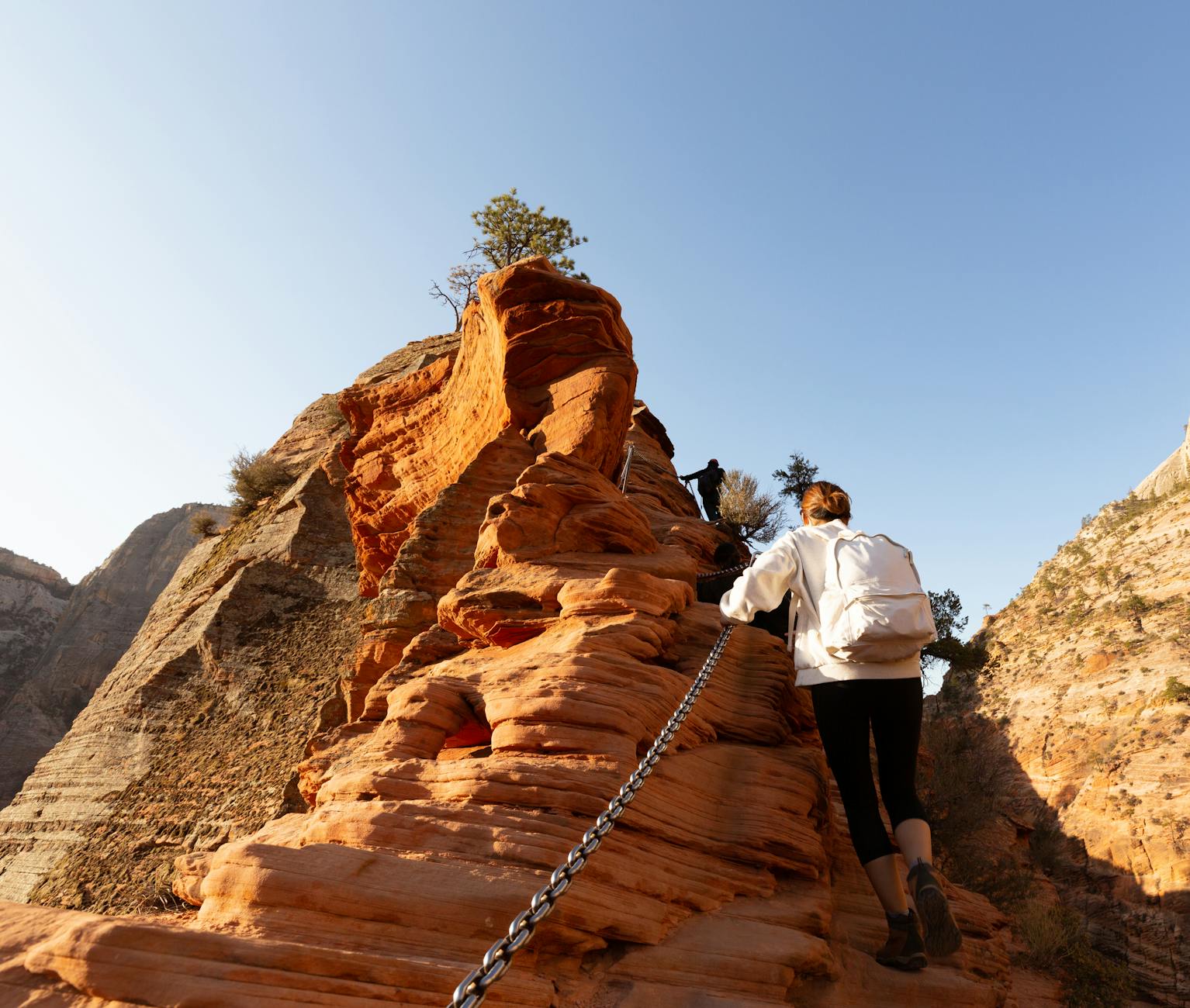
Whatever time of year you visit, early morning is the most reliable crowd avoidance strategy there is. The shuttle lines build fast. The Visitor Center lot fills by 8 AM in summer. Angels Landing chain section is a traffic jam by 9.
Set your alarm for 5:30 AM. Be on the first or second shuttle by 6:30. You’ll have the trails to yourself for the first two hours of the day – which happen to be the most beautiful two hours anyway. The light on the canyon walls in the morning is something the midday crowd never sees.
Practical rule: start every hike before 7 AM in summer. Be done with exposed, sun-hit trails by noon. Spend midday back at base, cooling off and recovering. Go out again at 5 PM for golden hour.
Explore Zion’s Quieter Sections
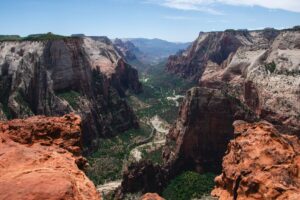
Most visitors see exactly one thing: Zion Canyon Scenic Drive. The shuttle stops. Angels Landing. The Narrows. That’s 90 percent of the park’s foot traffic concentrated in one corridor. The rest of Zion is often nearly empty.
East Zion (past the Zion-Mount Carmel Tunnel): Dramatically different terrain – open slickrock mesas, checkerboard sandstone, hoodoos. Canyon Overlook Trail, East Mesa Trail to Observation Point, Wire Mesa on nearby BLM land. Fewer people, no shuttle required.
Kolob Canyons: The northwest section of the park. Same admission pass. Exit 40 off I-15, about 45 minutes from Apple Valley. A 5-mile scenic drive through finger canyons of deep crimson sandstone. Often 15 to 20 degrees cooler than the main canyon. Taylor Creek Trail to Double Arch Alcove is spectacular and usually quiet.
Kolob Terrace Road: Drive north from the town of Virgin. One of the least-visited corridors in all of Zion. Stunning red rock country, almost zero traffic.
Use the Right Trailheads to Beat the Crowds
A few specific moves that keep you ahead of the crowds:
- Canyon Overlook Trail: Park at the trailhead on UT-9 east of the tunnel. No shuttle. One of the best payoff-per-effort hikes in the park, and you drive yourself there. Arrive before 8 AM to get one of the limited parking spots.
- East Mesa Trailhead (Observation Point): High-clearance vehicle required. Access via North Fork Road outside the park. Puts you at the top with a view looking down on Angels Landing – and almost no one gets there this way.
- Grafton Ghost Town: Near Rockville, just off the main road. Zero crowds. Pioneer cabins and cemetery with Zion’s peaks as the backdrop. Free, open, undervisited.
- Wire Mesa Trail: BLM land off the Smithsonian Butte Byway. 7.4-mile loop, beginner to intermediate, views that rival anything inside the park. Locals love it. Most visitors never find it.
Get Permits Early for the Busy Trails
For Angels Landing and The Subway, the permit is the crowd control. If you have the permit, you’re going. If you don’t, you’re watching from below.
- Angels Landing: Permit required year-round for the chain section. Apply via recreation.gov lottery – opens approximately 3 months ahead for seasonal permits, plus a day-before lottery at 12:01 AM MST. $6 application fee regardless of outcome.
- The Subway (bottom-up): 80 permits per day via recreation.gov lottery. Opens the 5th of each month for the following month. Apply as far in advance as possible.
- The Narrows (bottom-up): No permit required. But go early – the canyon narrows quickly fill on busy days.
Where to Stay Matters for Crowd Avoidance
Staying in Springdale puts you in the thick of it. Traffic. Parking. Lines for breakfast before you’ve even gotten to the park. Staying outside the immediate park area and driving in early gives you a real advantage.
Zion’s Tiny Getaway is a tiny home resort near Zion National Park in Apple Valley, Utah, 30 minutes from the park via the Smithsonian Butte Byway. You’re far from the Springdale noise. You can be parked at the Visitor Center before the crowds even finish breakfast. Private decks, propane fire pits, private hot tubs – so the middle of the day when you’re avoiding peak heat and peak crowds is actually enjoyable, not just dead time.
Staying outside the main tourist corridor also means you have easy access to the park’s quieter side – Kolob Terrace Road, Wire Mesa, the east entrance via UT-9 – without fighting Springdale traffic in both directions.
Book a tiny home resort near Zion National Park at zionstinygetaway.com and build your visit around the strategies above. The crowds are a choice. Avoid them.
Crowd-Avoidance Cheat Sheet
- Visit October (post-Columbus Day), November, January, or February for the lowest crowds
- Start every hike before 7 AM – the first shuttle is your best friend
- Skip the main canyon for a morning and do East Zion or Kolob Canyons instead
- Use Canyon Overlook Trail as your “easy win” – no shuttle, dramatic views, low traffic
- Get Angels Landing and Subway permits sorted before your trip, not day-of
- Stay outside Springdale for an earlier, easier start every morning
Avoiding crowds at Zion National Park is less about luck and more about planning. Apply these strategies and you’ll experience a version of Zion that most visitors never see – the quiet canyon before the shuttle lines form, the empty slickrock on the east side, the golden October light with no one in the frame. Book your basecamp at our tiny home resort near Zion National Park and build your trip around this approach.
Frequently Asked Questions
What is the least crowded time to visit Zion National Park?
October (especially the week after Columbus Day) and January through February are the least crowded times. Crowds drop 30 to 40 percent after Columbus Day while temperatures remain ideal for hiking. January and February offer the lowest visitor numbers but require microspikes for some trails.
What time should I arrive at Zion National Park to avoid crowds?
Arrive before 7 AM year-round. The Visitor Center parking lot fills by 8 AM in summer, and the shuttle lines grow quickly after that. Being on the first or second shuttle of the day gives you 1 to 2 hours on the trails before the bulk of visitors arrive.
Which trails at Zion are least crowded?
Canyon Overlook Trail (drive yourself, no shuttle required), East Mesa Trail to Observation Point, Kolob Canyons (Taylor Creek Trail), and Wire Mesa on nearby BLM land are all significantly less crowded than the main Zion Canyon corridor. Kolob Canyons in particular sees a fraction of the main canyon’s traffic.
Does staying outside Springdale help with avoiding Zion crowds?
Yes. Staying at a place like Zion’s Tiny Getaway in Apple Valley – 30 minutes from the park via the Smithsonian Butte Byway – lets you arrive before the Springdale traffic builds, park easily at the Visitor Center, and get on the first shuttle of the day without fighting the town’s congestion both ways.
Is Zion National Park crowded in the fall?
September is still busy. October becomes significantly less crowded after Columbus Day, with near-ideal hiking temperatures and fall color from canyon maples. Early November is very quiet. This shoulder season is widely considered the best overall time to visit for people who want fewer crowds without sacrificing weather.
Ready to Book Your Zion Basecamp?
Zion’s Tiny Getaway is 30 minutes from the park entrance via the Smithsonian Butte Byway – private decks, fire pits, and select cabins with private hot tubs. Book direct for the best rate.